The top sustainability features buyers want in Aussie homes




There was a time when the mention of a sustainable home conjured images of composting toilets, off-grid builds and compromise.
In 2025, however, energy-efficient housing is no longer a niche ambition, but a mainstream expectation.
Not only are buyers open to the idea, they're actively seeking homes that offer comfort, cost savings, and a better all-round performance.
The rise of energy-efficient features
According to Domain's 2025 Sustainability in Property report, more than half of all houses sold this year included at least one energy-efficient feature in the listing. For apartments, it was more than a third.
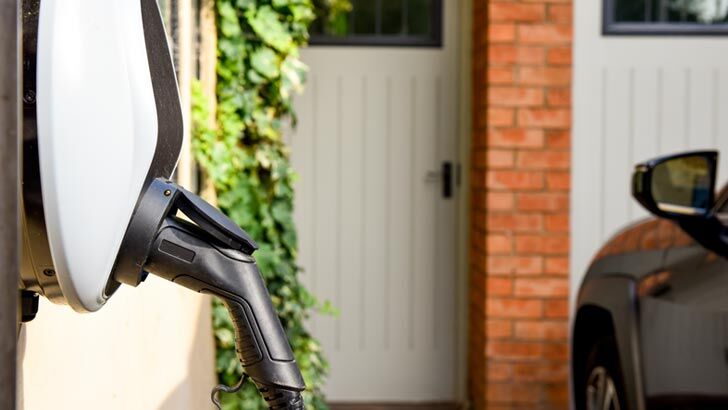
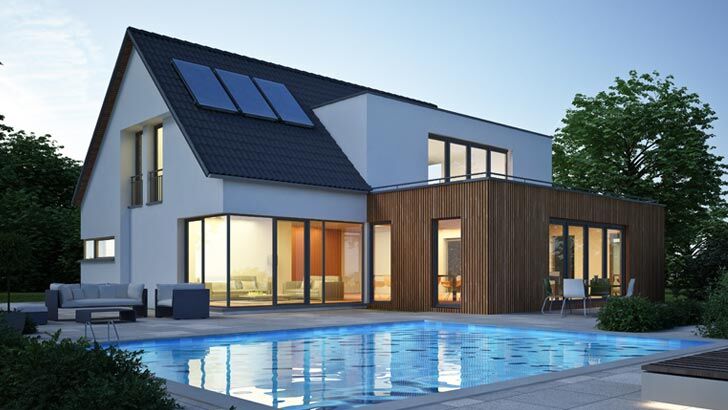
Among the most common inclusions are solar panels, double glazing, energy-efficient appliances and EV chargers, particularly in new builds.
While demand for environmentally friendly homes is on the rise, Cecille Weldon, founder of Future Agent and a leader in agent education, says the market is still grappling with how to talk about and identify energy-efficient properties.
"The label 'sustainable' itself is a barrier," she says.
"It doesn't resonate meaningfully or consistently with buyers and renters. And it can be slightly misleading, because energy efficiency delivers benefits that go well beyond environmental impact."
She points to a gap between the different features properties offer and how they are marketed. Too often,
terms like 'sustainable' are used loosely, without clear reference to performance or comfort.
Weldon says this makes it harder for consumers to understand energy efficiency and tangible lifestyle outcomes.
"These features deliver multiple benefits such as ongoing affordability, year-round comfort, and even health improvements," she says. "More than that, they attract a premium in the market when they're showcased effectively."
Seeing the light
That premium reflects a broader shift in buyer expectations, away from cosmetic features and toward performance.
Weldon says the most effective upgrades continue to be insulation, appropriate external shading, heat pump hot water systems, and reverse-cycle split system air-conditioning - features that make a measurable difference in both liveability and long-term value.

Findings from Amped Up, a national energy performance report released by Cotality (formerly CoreLogic), back up Weldon's observations.
The report confirmed that ceiling and wall insulation, high-performance glazing, draught sealing and shading are among the most effective ways to reduce how much heating and cooling a home needs to stay comfortable year-round.
These upgrades are proven to not only improve star ratings but increasingly influence buyer interest and property resale outcomes.
The Amped Up report also pointed to stark regional variation, with older housing stock in colder climates, in particular Victoria and Tasmania, underperforming significantly, while newer estates in outer metro areas consistently hit 5-6 stars.
"These measures shift the underlying performance of the home in a way buyers are beginning to understand,"
says Tom Coad, Cotality's head of banking and financial services.
"In colder States like Victoria and Tasmania, there is a high volume of older housing stock with poor thermal performance, many homes sitting below three stars. In contrast, newer estates in outer metro areas often achieve five to six stars due to more recent building codes."
The suburb of Molonglo in the ACT, where energy ratings are mandatory, has the highest median star rating in the country at 6.1 and Coad believes the ACT's benchmark is a sign of things to come.
"We've seen in ACT that poor ratings become a factor in negotiation and days on market," says Coad.
"Owners will need to weigh the cost of improving their home's comfort and efficiency against potential discounting - and that in turn will drive demand for affordable upgrade pathways, something we're working to support."
Buyers are already sharing their expectations, according to Thomas McGlynn, chief executive of Sydney-based agency BresicWhitney, with interest in sustainable homes increasingly front of mind and extending well beyond environmental concerns.
"It now extends to health, lifestyle and how a space enhances daily living.
"In newer homes, buyers now expect features like solar panels, energy-efficient appliances, improved thermal comfort, and EV charging capabilities. In older homes, the focus shifts to understanding what upgrades have been made, and the potential for further improvements," says McGlynn.
"While there isn't firm data yet to show these homes sell faster, that may change as the value placed on sustainability features continues to rise, especially across Sydney's lifestyle suburbs where there is consistent demand for quality homes."
Domain's figures show that houses with energy-efficient (EE) features sold for 14.5% more than comparable non-EE listings in 2025. EE units attracted a 12% premium. These homes also drew more attention online, generating up to 13.8% more views.
For investors, energy-efficient upgrades such as insulation, heat pump hot water systems and reverse-cycle air-conditioning become a strategy for protecting long-term value.
"These features deliver a future-proof property investment, ensuring good rental return and capital value when it's time to sell the property," says Weldon.
She also recommends that all property owners keep records of energy-efficient features because receipts and warranties will become key verification documents at the point of sale.
The full package
Whether it's a compact apartment or a custom build, more buyers are seeking homes that are cheaper to run, more comfortable to live in, and built with long-term performance in mind.
And the transparency around energy efficiency won't always be a nice-to-have, but will eventually become the standard in all property conversations.
"Within the next few years, ratings will start to feature more consistently in listings, particularly as buyers begin to expect this transparency," says Coad.
"This is not an overnight shift. But the direction is clear, and both industry and consumers are moving towards greater visibility of energy performance."
Best ways to boost the energy performance of older homes
- Ceiling and wall insulation
- High-performance glazing
- Draught sealing
- Shading and passive design
- Orientation for natural heating/cooling
Source: Cotality
Get stories like this in our newsletters.


 Reply
Reply