Who really wins from the expanded Home Guarantee Scheme?




The likely winners of the expanded 5% deposit Home Guarantee Scheme, the market rate for pocket money, and how supermarkets make it hard for shoppers to compare value. Here are five things you may have missed this week.
Who will really benefit from the expanded 5% deposit scheme?
Unlimited places, higher property price caps, and no income limits.

There's plenty of upside to the 5% deposit Home Guarantee Scheme (HGS), which was expanded this week, enabling more first home buyers to purchase a home with as little as 5% deposit.
It's welcome news for first home buyers battling poor housing affordability.
But the real winners may be buyers who get in early.
Analysis by the Insurance Council of Australia (ICA) estimates the expanded HGS could see house prices rise up to 10% over the next 12 months in markets that typically appeal to first home buyers.
This uptick could far outstrip the scheme's savings on lenders mortgage insurance.
Research group Cotality says high levels of demand are likely to be concentrated around the new price caps in the coming months.
Cotality's research director, Tim Lawless, says, "We could see the value of houses in well-located areas, recently unlocked by the expanded caps, surpass those new price caps quite rapidly."
$25 a week: Are your kids getting market-rate pocket money?
New data from Westpac reveals the nation's under-18s are receiving an average of $25 in weekly pocket money.
That's almost three times the pocket money their parents earned as youngsters.
But for plenty of Aussie kids, pocket money is no freebie.
Over half (55%) have to earn their pocket money by ticking off various household chores.
"Parents who are balancing a family budget know firsthand how important understanding money is - and are giving their children pocket money to teach responsible spending and saving from an early age," says Chris Brell, Westpac's managing director of everyday banking.
The Westpac banking app includes a 'Chores' feature (possibly much-maligned by the small fry), which helps parents know if their children have completed a chore.
But realistically, most mums and dads will know if the family pooch hasn't been fed or the dishwasher hasn't been emptied - chores often allocated to children.
That said, Brell notes parents who use tools such as a savings calculator "can help kids put safe spending and saving into practice, backed by robust parental controls."
More Aussies use unit pricing but stores don't make it easy
There's a lot to love about unit pricing - the fine print on shelf labels that shows how much a product costs using a standard unit of measurement.
The good news is that a survey by consumer group CHOICE found almost half of shoppers are comparing unit prices to help save money - an increase from 2022.
The catch is that only 61% of people say unit pricing is helpful, down from 71% in 2022.
Supermarkets don't always make it easy to use unit pricing.
One in three (32%) shoppers said unit prices were obstructed or covered.
Two in five found unit pricing text small or difficult to read, with the same proportion reporting inconsistent units of measurement.
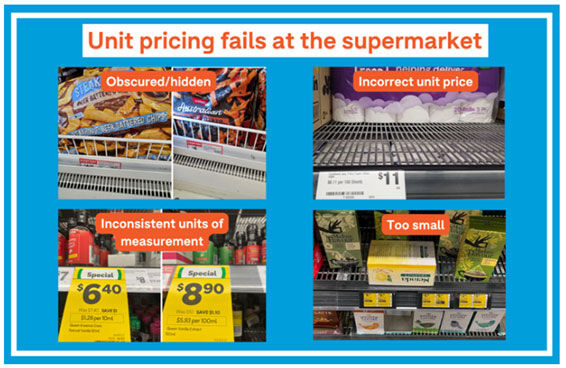
CHOICE senior campaigns and policy advisor, Bea Sherwood says, "When we showed shoppers product images without unit pricing, only 63% chose the best value product.
"When unit pricing was included, this increased to 76%, highlighting that unit pricing still remains one of the most valuable tools to save on groceries."
Sherwood hopes a government consultation paper on unit pricing will lead to a "crack down on supermarkets doing the wrong thing and undermining the consumer's ability to choose the best value product."
Watt's it worth? Solar boosts property values by $23,000
It can take five to 10 years for household solar systems to pay for themselves, with smaller 3kW systems potentially cutting $600 a year off electricity bills.
But according to a new Cotality report, the rewards of solar can go a lot further than bill savings.
It claims that installing a solar system can bump up a home's value by 2.7%.
That equates to a $23,100 rise in a property's value nationally.
How does this compare to the cost of installing solar?
According to Solar Choice, you could pay as little as $3170 for a 3kW system in Perth, or up to $14,960 for a 10kW solar system in Darwin.
Solar is fast becoming mainstream though take-up varies widely, ranging from 40% of houses in Perth, Adelaide and Brisbane to less than 20% of houses in Hobart, regional Victoria and regional Tasmania.
Older women face retirement poverty - and it's not just the pay gap
A new report from the Super Members Council suggests that women - especially single women, can be at risk of facing a retirement mired by poverty.
Women aged 60-64 have median super savings 25% lower than men of the same age.
One in ten women in this age group have no super at all.
Historically, the gender super gap was believed to be driven in part by the gender pay gap.
But the Super Members Council study shows common later-in-life events such as separation, unpaid caregiving for older relatives, and family violence are significantly more likely to force women into early retirement or part-time work.
Those life events dramatically erode women's ability to save for retirement, and could mean having up to $95,000 less in super in retirement.
Super Members Council CEO Misha Schubert says the report is a wake-up call for policymakers.
She warns, "Without urgent action, generations of Australia's lowest-paid women risk poverty in retirement."
Get stories like this in our newsletters.