Why Australian investors are changing how they invest




Rising living costs and global uncertainty aren't turning people away from environmental, social, and governance (ESG) investing, but they are changing where their money goes.
ESG isn't disappearing. It's adapting.
If you spend enough time in the responsible/ethical/sustainable investing world, you'll live through periods of strong inflows followed by moments of hesitation as investors lean in or pull back from investing in various shades of green.

During my time as a reporter and editor at FS Sustainability, I saw several of these cycles play out.
They were driven by shifts in policy, global crises like the GFC and COVID, domestic tragedies like the Black Summer bushfires of 2019-2020, alongside the maturation of the industry as it grappled with greenwashing and accountability.
ESG investing cycles are nothing new
Now in my current role as stewardship manager at U Ethical, the question I'm often asked is whether rising cost-of-living pressures and geopolitical volatility, most recently highlighted by the closure of the Strait of Hormuz, will cause investors to turn away from ESG.
As always when it comes to ethical/responsible/sustainable investing, the answer is a hearty "it depends."
According to Morningstar's Global Sustainable Fund Flows - Q4 2025 report, Australia and New Zealand sustainable funds saw inflows of US$400 million in net inflows during that quarter, noting "this continued the momentum from the third quarter's roughly US$ 330 million, bringing total net inflows for 2025 to around US$ 730 million".
ESG fund flows are shifting, not falling
However, those flows weren't evenly distributed.
Passive sustainable funds attracted US$660 million, while active strategies experienced outflows of US$260 million, with investors also showing a preference for fixed income. In other words, capital is rotating but not retreating.
Investors are recalibrating how they express their values alongside their investment objectives.
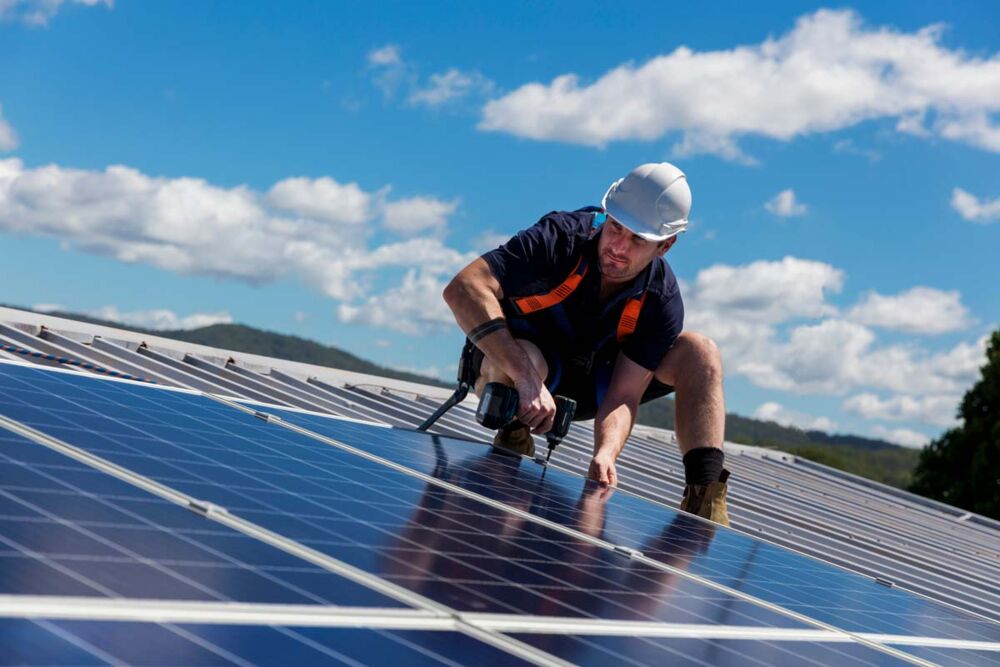
Fascinatingly, Australian consumers are connecting the dots between volatility in global oil markets, increased cost of energy and fuel and the possibility of managing this risk and are doubling down on rooftop solar backed with batteries.
Last year, the federal government introduced the Cheaper Home Batteries Program, which offers significant discounts for the upfront cost of installing small-scale solar battery systems in households.
The same dynamic is playing out across markets: money is moving, not leaving.
Households are already shifting their behaviour
The program proved so popular that in less than one year, Australia's residential battery capacity doubled and more than a quarter of a million units were installed across the country, according to the ABC.
This is a tangible example of values and economics aligning: investing in renewable infrastructure is not just an environmental decision, but a financial one.
Meanwhile, 2026 is the first full year where large entities like the big end of the ASX and financial institutions will report against mandatory climate-related financial accounting standards, meaning that taking climate into account when assessing risks and opportunities is no longer a nice to have, but the baseline.
ESG investing now extends beyond climate
Of course, the energy transition is only one dimension of ESG. Investors continue to engage across the full spectrum of environmental, social and governance issues.
At U Ethical, our philosophy remains unchanged.
We assess ESG factors as both risks and opportunities, focusing on those that are financially material to each company, and prioritising engagement where we can have the greatest impact consistent with our broader ethical framework.
Importantly, conversations with investors, advisers and researchers suggest that values-led considerations remain front of mind.
We are regularly asked about the implications of AI for valuations and inequality as well as impacts on hiring and the future workforce, biodiversity and nature-related risks, and modern slavery within global supply chains.
Demand for ESG is evolving, not disappearing
So while financial returns remain paramount-as they should be-demand for responsible and ethical investing has not disappeared. It has evolved.
Or, to borrow from Talking Heads: "the same as it ever was, the same as it ever was."
Get stories like this in our newsletters.