Why thousands of Aussies are getting an insurance refund




A major insurance provider to refund millions of dollars in premiums, why more middle-class Aussies are going hungry and the Reserve Bank gives its latest verdict on the health of our household finances. Here are five money stories you might have missed this week.
1. Tens of thousands to receive CTP refunds
Tens of thousands of Australian drivers are being refunded millions of dollars after being overcharged for their car insurance.
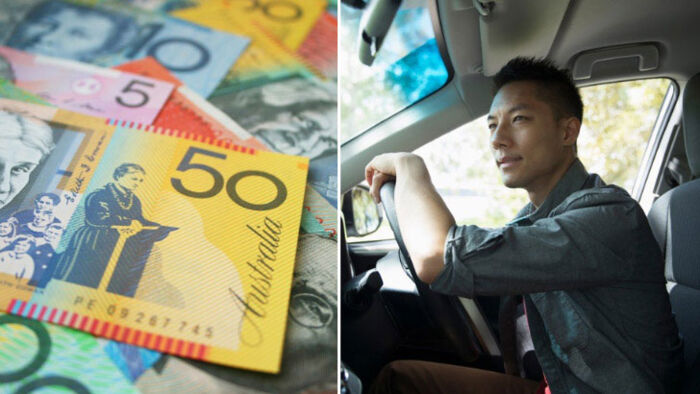
NRMA Insurance is making the payments after admitting it had charged more than it should have for premiums on compulsory third party (CTP) insurance.
The company sells CTP cover to drivers in New South Wales and the State Insurance Regulator has fined it $479,500 for its actions there.
Following an investigation, the regulator found NRMA Insurance had short-changed customers on promised discounts and refunds in several cases.
But the most serious contraventions occurred when the company applied the wrong risk ratings to more than 41,000 CTP policies.
This resulted in Aussies being overcharged by a combined $12,000,000.
NRMA Insurance parent company Insurance Australia Group (IAG) says it's providing remediation payments, with interest, as quickly as possible.
IAG says anyone in line for compensation should have been contacted and most have already received their money back.
2. Middle-class Aussies going hungry
A new report into food insecurity in Australia has found the issue is affecting more middle-income households than before the cost of living crisis.
The 2026 Hunger Report, released by Foodbank, found 37% of households earning between $33,800 and $90,999 per year were food insecure.
The charity considers a household to be insecure when it can't consistently access enough nutritious and culturally-appropriate food.
Foodbank CEO Kylea Tink says rising costs are pushing more middle-class families into this category.
"Hunger is no longer confined to the margins, it's impacting middle Australia," she said.
"A wage used to be what kept food on the table, but for a growing number of working Australians, their pay packet no longer stretches that far".
The proportion of food insecure middle-class households is the same as last year, but up from 31% in 2022.
3. Homeowners in strong position despite mortgage stress
The Reserve Bank says most Aussie household balance sheets remain strong, despite increasing stress about the cost of mortgages.
Australia's central bank revealed earlier this month fewer than 1% of mortgage holders are in negative equity, owing more on their home loan than their property is worth.
It comes after major banks reported earlier this year that more than 80% of mortgage borrowers were ahead on their repayments and household deposits were at record levels.
But new research suggests many Aussies are struggling to keep their finances at this level.
Research company Roy Morgan revealed this week that almost 32% of home loan borrowers are at risk of 'mortgage stress.'
The findings follow four interest rate rises so far this year, with a fifth widely tipped to be announced next week.
Roy Morgan says a household is in mortgage stress if they're spending 25-45% (depending on income) of after-tax earnings on their home loan.
4. Gift card holders wobble on David Jones news
Department store giant David Jones has reportedly been lent $10 million to prepare for Christmas and Black Friday, as it struggles with cash problems.
The company was loaned the money to stock its stores in preparation for the busy shopping events, according to the Australian Financial Review.
The outlet also reported David Jones had been late to pay some of the brands who sell products within its stores.
The news has prompted concern from some Aussie shoppers, who suggested online the company might soon collapse, leaving its gift cards worthless.
Retail consultant Trent Rigby believes warnings of David Jones' demise are "overblown", but admits it's likely the company will have a smaller presence in the future.
"I think it'll still be around, just in a different format," he said. "I think what you'll see off the back of this is fewer stores".
5. ASIC investigating failed Firmus float
The corporate regulator has revealed it's looking into Firmus' aborted attempt to list on the Australian Stock Exchange.
Australian Securities and Investments Commission (ASIC) chairwoman Sarah Court broke the news to politicians yesterday, according to multiple outlets.
Court was quoted as saying ASIC was "making inquiries" into the deal, including whether potential investors were given misleading information about the company.
But she clarified the watchdog's probe hadn't yet escalated into a formal investigation.
Firmus cancelled plans to list on the ASX earlier this month after reportedly failing to agree with investors on how much shares in the company would cost.
The Aussie data centre operator's IPO had been hotly anticipated as a test of investor appetite for AI stocks.
But the aborted listing instead kicked off weeks of reckoning for the sector.
Fellow Aussie AI businesses AirTrunk and NextDC subsequently ran into trouble on share markets, as investors became cautious about putting money into AI.
Get stories like this in our newsletters.