Why scam complaints are up and more are on the way




The national finance ombudsman tackles growing scams, a community backlash causes new headaches for AI companies and why the GST should be higher. Here are five money stories worth your attention this week.
1. Scam complaints up and more on the way
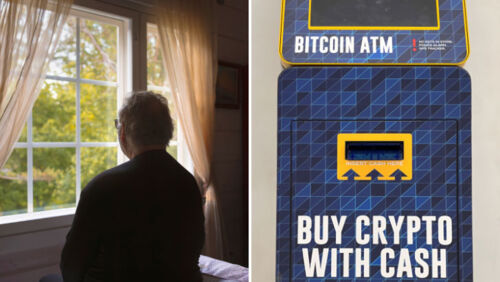
The national finance ombudsman has received its most complaints ever, including a growing number of concerns about scams.

The Australian Financial Complaints Authority (AFCA) will soon be helping even more scam victims, as it takes on a new role making sure Aussies are protected from online cons.
AFCA received almost 120,000 complaints in the year to June, including 6,706 about scams.
Scam complaints were up 12% from the previous financial year.
AFCA says these criminal schemes are becoming more sophisticated and taking longer to unravel.
But the independent resolution service could soon be hearing from even more victims.
AFCA already mediates between banks and scam victims and orders institutions to pay compensation where required.
But from March next year, the organisation will be tackling cases involving telcos and digital platforms as well.
These industries, along with banks, will be required by the government to meet new standards to protect Aussies from scams.
AFCA will operate a dedicated Australian Scams Ombudsman to step in when consumers don't believe businesses are meeting these new expectations.
AFCA told Money it's too early to reliably predict how many scam complaints it will receive, but says it has invested in its systems and teams to prepare for its new role.
2. Community resistance sinks another AI business
Another Aussie data centre company has run into trouble on the share market, after a backlash from residents delayed expansion plans.
The price of shares in NextDC slumped more than 40% earlier this week after it predicted smaller profits due to a delay in getting electricity to one of its data centres.
The company is expanding its M3 facility in Melbourne and needs new power poles to be installed along suburban streets leading to the building.
They're significantly higher and wider than traditional poles and residents have been campaigning against having them put in outside their homes.
Earlier this month, the ABC reported locals were deliberately parking their cars along the street to prevent power company workers from installing the poles.
It comes after fellow data centre business AirTrunk delayed plans to sell assets on Singapore's stock exchange and Firmus pulled out of floating on the ASX, as investors question the numbers behind the AI boom.
3. Should the GST be higher?
How would you feel about paying a bit more for (almost) everything?
Former politicians and advocates are calling for Australia's GST to be raised to 15%.
They say it would be a more effective way of tackling national debt and keeping up with growing healthcare costs than relying on income tax.
RMIT tax expert Dr Venkat Narayanan agrees it's a debate Australia should be having.
"The GST is a much more stable source of revenue for government," he explains.
"Particularly with ageing populations and changing demographics."
Think tank the Grattan Institute predicts state governments could soon struggle to pay for the increase in older Aussies retiring from work and needing more care.
It says a 15% GST would deliver them the money to do this and allow all governments to reduce their debt in preparation for big crises like the Covid pandemic.
Australia's current 10% tax is almost half the average rate seen in similar economies.
Dr Narayanan says increasing consumption levies is a "bread and butter" reform overseas and that Australia is unusual in having never raised its GST.
He adds that such a move would be accompanied by income tax cuts for lower earners.
But admits sensitivity to the cost of living means Australia's consumption tax is unlikely to be raised any time soon.
"There would be an almost 0% chance of this happening in the next six to 12 months," he says.
4. Bad news for Aussie fashion as shoppers get refunded
Several Aussie clothing labels have come in below online giant Shein in a global ranking of ethical fashion practices.
The latest industry scorecard released by Baptist World Aid put brands like Billabong, Quicksilver and Seafolly below the fast fashion pioneer.
Baptist World Aid gave hundreds of fashion labels a rating out of 100 for how well their parent companies ensured ethical and environmental sustainability across supply chains.
Shein was given a score of 28. Boardriders, the company behind Billabong, Quicksilver and other brands, was given a score of just three.
Meanwhile, another Aussie label has made the news this week for better reasons.
The new leaders of activewear brand Stax announced they would issue store credits to customers who had missed out on orders after the company collapsed in June.
The brand won praise for the gesture -- something leaders told Nine Newspapers they weren't legally obliged to extend, but had decided to anyway.
5. More competition coming to new airport
Last month, we brought you news of cheaper flights in and out of Sydney thanks to the choice being offered by the city's second airport.
Now, travelers could benefit from even greater competition with another airline announcing it'll join the roster, ahead of the airport opening to passengers on Sunday.
Qatar Airways revealed it will fly between Doha and the new Western Sydney International (WSI) from December 2027.
The carrier has become a familiar site at Australian airports in recent years, competing with major airlines on routes to Europe via the Middle East.
Money revealed last month some flights were up to 50% cheaper to or from WSI than Sydney's existing airport, although the new facility is a greater distance from the CBD.
Get stories like this in our newsletters.