Andrew Binns is changing how Aussies donate to charity




Ask the average person to find similarities between regional Victoria and a remote Fijian island and most would struggle. Not Andrew Binns.
Raised on a farm 20 minutes outside the town of Dimboola in Victoria's Wimmera Mallee region, Andrew spent three years of his childhood living on a small island in Fiji after his parents signed on to an aid project supporting the development of the Fijian sheep industry.
In many ways, the two were worlds apart, yet they both taught Andrew the same lesson: that strong communities are built on people supporting one another.
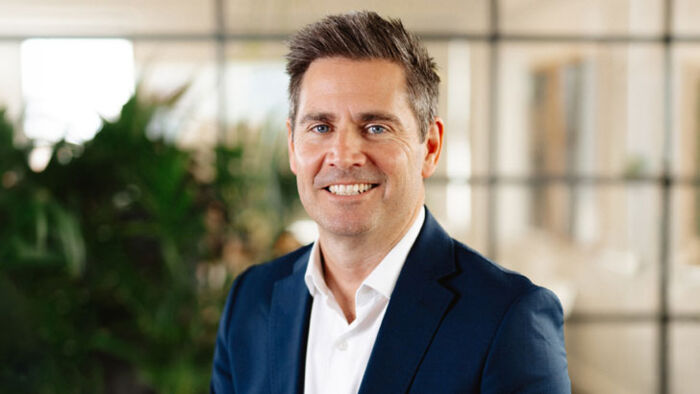
"Anyone that's grown up in country Australia knows how big community is. You're part of the local sports club; you help your neighbours - you do all that kind of stuff. The community was a big part of growing up on a farm.
"Fiji was the same. Seeing people in Fiji giving far more than others despite having far less was something that stuck with me."
Those early experiences would prove foundational - not only in shaping his thinking around giving and community, but his eventual career.
Not that he knew that straightaway. After finishing school, Andrew enrolled at the University of Melbourne where he studied geomatic engineering which, in his own words, involves mapping, surveying and geographic information systems.
What really fascinated Andrew was how land is used: how it is bought and sold; how it is used to grow wealth; and how it can support community.
"I ended up doing my master's and then doing some research work that focused on how land can be used to support poverty alleviation in Southeast Asia.

"Then a job came up at World Vision to help them look at that part of their programming. After about three or four months, they decided they weren't going to do that anymore. But I ended up floating around World Vision for 15 years doing a whole bunch of different, amazing things."
A different way to give
Looking back on his time at World Vision, Andrew says two things stick with him. The first was a visit to a community in Ethiopia.
"This community was hours away down bumpy roads from a main town. They were living in mud huts, cooking on open fires and the kids were playing soccer with balls made out of plastic bags.
"People would have called them destitute and in poverty, but they had community, they had each other, they were working towards things and they were happy. That really struck me - the difference between perception and reality."

The second was an insight - an appreciation of the collective impact that givers can have.
"World Vision has donors that give $48 a month. They would never see themselves as philanthropists but, as a whole, they give more than all of the major philanthropists combined.
"And they give that money basically untied - so the community essentially decides how to use that money and what kind of programs they wanted to run."
This idea that meaningful change can flow from the goodwill of ordinary people is what ultimately drew Andrew to Australian Communities Foundation (ACF), where he took up the position of chief executive officer in 2024.
"For me, it [ACF] brought together that community part and that philanthropy part in a way I hadn't seen other philanthropic organisations do. That was a big attraction. That sense of how do we make philanthropy more accessible and structured."
At its core, ACF is a non-profit focused on helping Australians give more strategically.
They do this by facilitating tax-effective structures for donors, handling the back-end admin and connecting donors with community organisations and causes they want to support.
One of the major advantages of donating through structures such as a fund or foundation via an organisation like ACF is all about the timing.
Rather than donating directly to a charity, a donor can contribute to a philanthropic fund, receive a tax deduction and then take the time to decide where that money is directed.
"That's where structured giving can be really powerful from a tax perspective - especially for people that have larger amounts to give, or significant tax events," Andrew says. "So, we help you give and give really well, essentially."
ACF has distributed $220 million worth of grants since its inception in 1997, to intiatives in Australia and overseas.
When good causes miss out
While community foundations like ACF exist to connect donors with causes and communities, their full potential has - to some degree - been hamstrung. At least, until very recently.
Longstanding rules around deductible gift recipient (DGR) status limited the range of charitable organisations that have been able to benefit from the flow of philanthropic funding.
Charities without DGR status can still receive donations, but they're ultimately missing out on a significant pool of potential funding.
"It's a really complex and outdated system that's been built over decades," explains Andrew.
"If a charity's primary work doesn't fit neatly into one of the DGR categories, then it doesn't get tax deductibility. Even if it's a charity doing charitable things.
"So, a lot of local, grassroots organisations aren't eligible for tax deductibility, or they don't have the means to go through the process of being specifically listed in the tax act."
This matters, a lot. As Andrew explains, the ability to claim charitable donations at tax time can be an influential factor when it comes to the amount of money Australians give.
"Most people don't approach giving with the idea of wanting to do it to reduce their tax.
"They usually want to make a difference, and that tax deduction is a bonus or something that allows them to make an even larger financial contribution.
"That's why I think it's really important that people do get that tax deductibility. It's a motivator, but in most cases, it's not the only reason."
Reform decades in the making
After years of advocacy from those in the charitable sector, things are starting to change. In early 2025, the Federal government rolled out a new pathway for community foundations to obtain deductible gift-recipient status.
Then in September last year, ACF announced that it had been officially endorsed by the Australian Taxation Office as a Community Charity under the new rules.
"This allows organisation like us - or individuals through us - to give to any individual, organisation or charity that's undertaking charitable activities aligned to a DGR purpose," says Andrew.
"In places like country Victoria, as one example, there's not that many DGR charities. People just give to their local community and do great things in the community.
"But if those activities align to a category around health or the environment, or other things, you can now get a tax deduction for those gifts, as long as you use the community charity structure to do so."
To put the potential scope of the reform in perspective, Andrew says that there's about 60,000 charitable organisations in Australia, but only half of those have DGR status.
Of course, it's not just community foundations and groups doing charitable work on the ground that benefit. Andrew says the reform is providing new possibilities for Australians wanting to give.
"For individuals and families who want to do things a bit differently, who have always wanted to give to grassroots organisations, or people and organisations in their own community, this opens up those avenues for them."
Philanthropy for everyone
For Andrew, the recent reforms are a significant step in the right direction - that remove real practical barriers to giving.
But beyond regulatory reform, he also believes there's a real opportunity for a cultural shift in the way Australians view and practise philanthropy.
"We teach our kids about saving money, but we don't always teach them about giving.
"Our financial advisers and accountants know all the tricks to reduce our taxes, but they're not as knowledgeable on the giving structures that they can support people with. So, I'd love to see these become normal parts of family and financial-planning conversations - so that this just becomes part of our culture and our way of thinking."
Encouraging more Australians to give is one thing. Challenging the idea that philanthropy itself is the domain of the ultra-wealthy, is another.
Throughout his life and career, Andrew has seen that generosity has little to do with wealth - whether that's the communities he grew up in supporting each other or the everyday donors contributing to causes through World Vision or ACF.
"The word philanthropy actually comes from ancient Greek and translates to love of humanity. To me, small-scale donations or a few hours of volunteering - these are all about love of humanity. They're just as philanthropic, in some ways, as someone funding a hospital wing.
"So I always encourage people to just start. To start small and to give consistently because that can create massive change over time."
Get stories like this in our newsletters.