Ask Paul: We have $600k but no pension for 10 years




They have $600,000 in savings, super and ETFs, but won't qualify for the age pension for another decade. Paul explains how they could generate a reliable retirement income while keeping fees low.
Reader question
Hi Paul,
We are immigrants and are investing in a landscape that is unfamiliar. We moved here after all our children became Australian citizens.
We are now too, at the age of 74 and 67.
We live in a granny flat and contributed to a house big enough for three generations.
Now we need advice about where to invest and earn a monthly income for our living expenses. We will not receive a pension for about 10 years.
We have $600,000: $100,000 in a high-interest savings account, $250,000 to $300,000 in super, and the remainder in ETFs.
I need to keep fees low with a good return. Can you help with information on super funds and companies with low-cost ETFs?
Am I on the right track? - Elizabeth
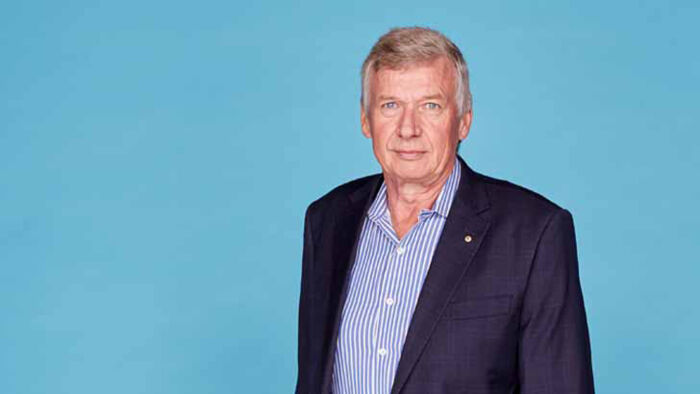
Paul Clitheroe's response
We have something in common, Elizabeth, except at very different times in our lives.
My parents moved to Australia as 10-pound Poms way back in 1963 when I was eight and my sister was four. I do remember it took my parents some time to understand the financial environment here, particularly our quite peculiar tax system.
We also live with three generations in our family home. Our middle daughter moved back home with her husband and two children while they build a new house.
For our readers wondering about the 10-year wait for an age pension when you are both at qualifying age, this is not an income or assets issue. It is the newly arrived resident's waiting period.
I'd have to steer you to a financial adviser for specific advice, but in broad terms I don't see a problem generating $30,000 a year, plus Christmas presents for the kids and grandkids, from $600,000.
You only need to generate 5% a year on your $600,000 to do this. If investing in joint names, tax should not be a major issue.
Frankly, I think you have an excellent plan. I'd do something similar.
It is a good idea to keep about $100,000 in a super-safe, high-interest bank account. I imagine you would earn more than 5% on that, so there is about $5000 a year to start with.
But we do need to think about inflation.
Super is a terrific asset for retirees, but I am definitely going to direct you to an adviser, or the advice team offered by major super funds.
Obviously, I'd want you in a large, low-cost super fund and, given your cash reserves of $100,000, I'd suggest you talk to them about a balanced investment option.
I suspect a pension from super may be the way to go, but talk to your chosen fund and seek advice. If a pension is the right option for you, there is another 5% being paid to you on, say, $300,000. That is another $15,000 a year.
Finally, yes, a low-cost ETF is a good way to get global diversification for incredibly low fees. As a starting point, you could look at Betashares, Vanguard and iShares, although there are plenty of providers.
About $200,000 will give you excellent global diversification and, at about 3% income, another $6000 or so in annual income.
This would leave you a little short of your $30,000 target, but you could comfortably look at a higher-income ETF, draw a little more from super, or supplement your income from your $100,000 cash reserve.
The key point here is that you are not asking for miracles. A return of 5% a year from a balanced portfolio, plus some inflation protection, is historically a very conservative objective.
I hope you enjoy this beautiful country as much as I have.
What to read next
- What is an ETF? A beginner's guide to exchange traded funds
- Paul Clitheroe: From England to Australia
- Are you beating the average? How much Aussies have in super
- How to live with extended family without drama
- Ask Paul: I grew up poor, now I'm worried my kids are spoilt
Get stories like this in our newsletters.