The best and worst performing stocks of the week




If you feel like you're working harder but getting nowhere, you're not imagining it.
But what if there's a place in Australia where your money stretches further, your career moves faster and your chances of building real wealth genuinely improve?
Heading into 2026, one state is quietly rewriting the economic script: Western Australia.
When you strip away the noise and focus on four factors that create opportunity: higher incomes, lower living costs, strong job demand and genuine business support, Western Australia keeps coming out on top.
CommSec's latest State of the States report confirms it. Western Australia isn't just performing well; it's outperforming the nation. It leads in employment, retail spending and construction.
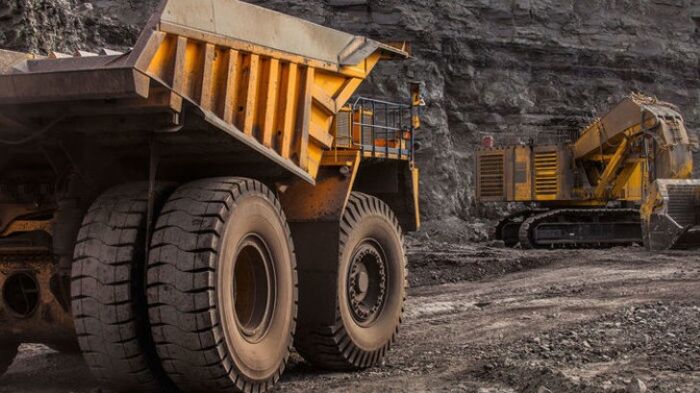
While the East Coast struggles with rising unemployment, Western Australia continues to post strong job numbers, driven by mining, engineering, energy and the massive supply chains that support them.
Skilled workers are in high demand, wages remain strong and opportunities extend to contractors, tradespeople and service-based businesses.
But opportunity is not only about what you earn, it's also about what you keep, and this is where Western Australia quietly crushes the competition.
Perth's cost of living remains significantly lower than that of Sydney and Melbourne. Median house prices remain manageable, making homeownership a realistic possibility rather than a distant fantasy.
Every dollar stretches further, meaning more savings, more investing and far less pressure on day-to-day life. It's the combination of high-income potential with lower living costs that creates real upward mobility, and Western Australia is the only major state that delivers on all fronts.
Then there's the sheer scale of government investment. Western Australia's infrastructure blitz from METRONET to major regional resource projects is injecting billions into the economy. That money flows directly into construction, logistics, engineering, transport and professional services.
For business owners, it means contracts. For job seekers, it means stability, while for investors, it means long-term economic confidence.
Unlike other states, Western Australia has backed this with genuine business incentives: grants, local procurement programs and streamlined pathways for businesses looking to grow or relocate.
It's becoming one of the most supportive environments in the country for entrepreneurs, startups and small to medium-sized enterprises.
Western Australia is no longer just "the mining state". It's a blueprint for sustainable growth, combining high wages, affordable living and strong investment into both infrastructure and industry.
Whether you're building a career, scaling a business, or trying to get ahead financially, it's one of the few places where the ground is moving in your favour.
So, in 2026, Western Australia isn't just another option; it's a strategic advantage and the people who recognise that early are giving themselves the best shot at winning.
What are the best and worst-performing sectors this week?
The best-performing sectors include Materials, up more than 5%, followed by Energy, up more than 1.5% and Utilities, up more than 1%.
The worst performing sectors include Information Technology, down more than 5%, followed by Financials, down more than 3% and Real Estate, down almost 2%.
The best performing stocks in the ASX top 100 include IGO Limited, up more than 34%, followed by Pilbara Minerals, up more than 29% and Mineral Resources, up more than 19%.
The worst-performing stocks include Life360, down more than 14%, followed by Bendigo and Adelaide Bank, down more than 12% and Xero Limited, down more than 10%.
What's next for the Australian stock market?
This week, the All-Ordinaries Index delivered a classic tug-of-war around the crucial 9,000 level, as it held just above where it began on Monday at the close on Thursday.
Recently, the 9000 level has been a reliable zone of buyer support, and the market's ability to stay above it again this week suggests that buyers are still present, although they may take a little longer to regain full momentum.
The standout story, however, was the Materials sector, which snapped back with an impressive 5% surge. That strength also helped pull Energy higher.
Volatility is not unusual in the Materials sector because when it turns, it often moves quickly and decisively. That's why these sharp rebounds are exactly what you tend to see in the early stages of a strong bullish leg.
If you're not already scanning the top Materials stocks, now is the time, as these setups can appear suddenly, and once they run, the best opportunities often don't come back around for a while.
I wouldn't underestimate the importance of the November pullback for what comes next. The battle between the buyers and sellers sets the stage for the next major move.
If November ends with the index around 8% down from its all-time high, history suggests we could see a sharp recovery into a Christmas rally.
However, if the decline extends deeper, the weakness may spill over into December and reshape the short-term trend.
Get stories like this in our newsletters.