Why scammers are impersonating Kochie, Scott Pape and Hugh Jackman




Scammers are using AI-generated celebrity endorsements, WhatsApp group chats and fake success stories to lure Australians into risky share investments. More than $2.75 million was lost by just 16 investors earlier this month as pump and dump scams surged. Here's how they work and the warning signs to watch for.
A stock tip from a celebrity finance expert could be the first sign you're being targeted by scammers.
Australia's securities and investments regulator is urging budding investors to beware of 'pump and dump' scams after seeing a spike in criminals using fake celebrity endorsements to draw people into these ruinous schemes.
What are pump and dump scams?
A pump and dump refers to when someone with a financial interest in a small company or asset spreads disinformation in order to encourage other people to chip in and inflate the price of their investment.
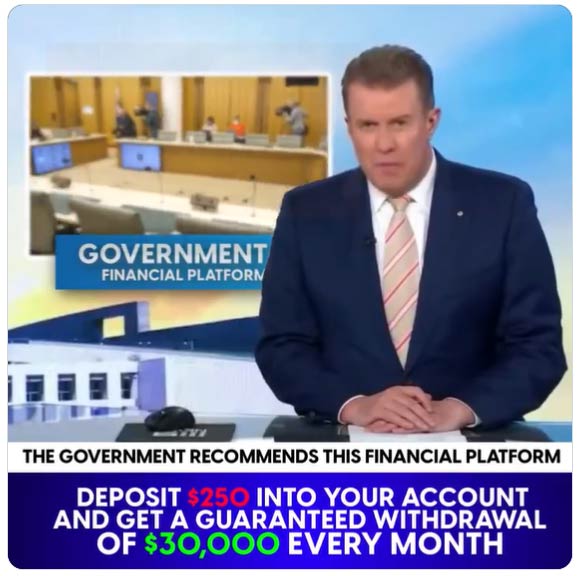
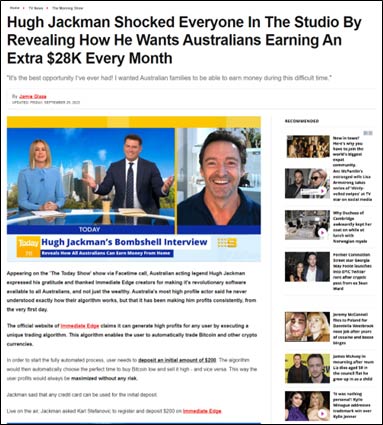
ASIC says pump and dump operators are increasingly using AI to create images and videos that make it look like well-known finance industry figures, such as high-profile investors and economists, are endorsing their investment opportunity.
The regulator's warning comes after Money finance expert Paul Clitheroe was impersonated by scammers trying to lend credibility to unreliable stock tips.
Other scam efforts have included fake endorsements from popular media personalities like David Koch and Scott Pape or successful business people, including Andrew Forrest and Elon Musk.
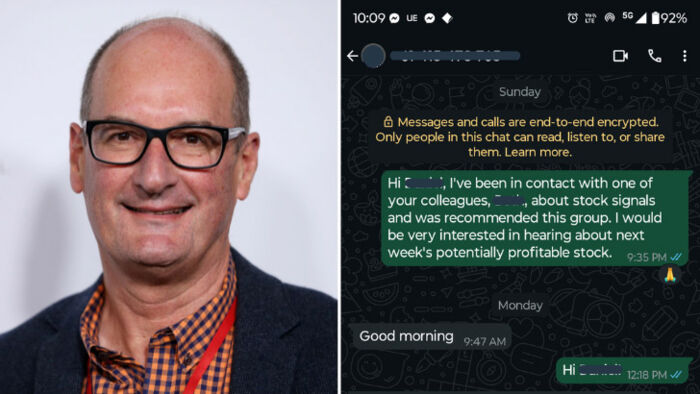
These fake endorsements often feature prominently in social media ads designed to lure investors into private messaging groups.
Anyone who clicks on these to register their interest will be funneled into a group chat on a messaging platform like WhatsApp and Telegram.
"It gives the appearance that it's a really thriving investment program," says Grant Williams, head of financial crime operations at banking group NGM.
"[The victims] see other people talking about how much money they've made [and] don't want to miss out, so they start putting money into these investments."
Once those drawn into the opportunity have bought a large amount of the asset and it's price has been sufficiently "pumped," the operators behind the scheme will "dump" (sell) their share for a profit.
"Because they are selling those assets in a large chunk, the price of the asset will collapse. So later investors will be left with substantial losses," says Professor Angel Zhong from the School of Economics, Finance and Marketing at RMIT.
Red flags of a pump and dump scam
- Celebrity stock tip promoted on social media.
- Promises of guaranteed or unusually high returns.
- An invitation to join a private WhatsApp or Telegram group.
- Pressure to buy quickly before it's "too late".
- Requests for screenshots or proof you've purchased shares.
- Constant posts from other members claiming big profits.
- Recommendations to invest in little-known or obscure stocks you've never heard of.
Sticky assets leading to million-dollar losses
ASIC says victims can be left holding shares worth a fraction of what they paid.
To make matters worse, the obscure nature of the assets at the centre of pump and dump scams can make selling them even at their depleted value a difficult task.
"[The assets are] normally very small or illiquid, small cap or micro cap stocks," says Marc Jocum, senior investment strategist at Global X, a company providing ETFs to investing platforms.
"Some of these smaller companies don't have as much market depth or trading volume in them, so let's say you wanted to sell at a particular price, but there's no buyer on the other end."
In a sign of how quickly the tables can turn on budding investors chasing a hot tip, ASIC says it's seen prices of shares pumped as high as US$11, before quickly falling to $1.
Such situations lead to what the regulator saw earlier this month, when more than $2.75 million was lost by only 16 Aussie investors sucked into pump and dump operations.
What makes pump and dumps so appealing?
ASIC Commissioner Alan Kirkland says the fact that participants are being directed to buy real shares through legitimate trading platforms is central to what makes pump and dump schemes powerful.
"Many victims don't realise they're being scammed because they genuinely own the shares they've purchased," he explains.
"[But] just because you can see shares in your trading account doesn't mean the investment recommendation was legitimate."
The capacity of online communities to supercharge the spread of disinformation is also pushing these scams to new heights, adds Professor Zhong.
"In the past, promoters may have relied on newsletters or email campaigns... social media and group chats make the problem worse," she says.
"Scammers can reach thousands of investors very easily and this online community creates the impression of independent and professional opinions."
Why retirees are being targeted
Bankers and regulators say pump and dump scammers are aiming their online outreach to people in particular life stages where they might have built-up funds.
"We suspect scammers are deliberately targeting Australians nearing retirement because they know many people in this age group have accumulated savings and are looking for investment opportunities," says Kirkland.
How to protect yourself
- Be sceptical of stock tips shared through social media.
- Avoid investment groups on WhatsApp and Telegram.
- Never rely on screenshots showing profits.
- Research companies independently before investing.
- Check ASIC alerts and warnings.
- Be wary of celebrity endorsements, especially videos and images that may be AI generated.
What can be done
Marc Jocum from Global X ETFs admits the investing industry has a role to play to protect Australians from pump and dump scams.
"Investor education needs to come first and foremost, both from providers like Global X and big investment houses, but also from social media platforms," he says.
Several banks and experts sounding the alarm on pump and dumps have also called out social media platforms and their algorithms for helping scammers reach their target audience.
Experts like Professor Zhong say these services could highlight more clearly when content is AI generated, in order to highlight high-profile endorsement that could be fake.
She says trading platforms could also issue warnings and watch out for abnormal trading volumes.
Facebook, Instagram and WhatsApp owner Meta have been contacted for comment.
Get stories like this in our newsletters.