The debt mistake that can delay your retirement plans




Will your debt hold you back from the retirement you want? James Wrigley shares the debt traps to avoid and the smart moves to get retirement-ready.
I hate the phrase "good debt versus bad debt". Debt is debt. It all needs to go before you can truly retire life ready.
Regardless of what the borrowed money was used for, every debt requires a regular repayment. That could be interest only, or principal plus interest. Either way, that outgoing payment is a drag on your retirement cashflow.

If you need to fund your lifestyle and your debt repayments in retirement, you'll need even more assets to retire comfortably.
What's the real difference between good debt and bad debt?
How does good debt work for investors?
Good debt refers to money borrowed to purchase an investment asset, such as an investment property or shares. When you buy an income-producing asset, the tax rules generally allow you to claim the interest as a deduction.
If the interest cost is higher than the income the investment produces, the excess becomes a deduction against your other income - known as negative gearing.
But if the investment isn't growing at least enough to cover what you're out of pocket each year, you are going backwards financially. That doesn't sound like "good" debt at all.
Many people tell me they plan to use equity in their home to buy another investment property even though they're within five years of retiring. They want to "build wealth for retirement". But taking on extra debt so close to retirement usually pushes them further away from achieving it - unless they sell the property soon after buying it. The new mortgage often becomes a negative drain on their cashflow.
What counts as bad debt - and why is it risky?
Bad debt is money borrowed to purchase something where you can't claim the interest as an expense.
Within this category, there's bad debt - and extra bad debt.
The not-so-bad debt is your home loan. Yes, you repay it with after-tax dollars. It's not tax-efficient, but owning your own home is one of the strongest foundations for a secure retirement. So as far as bad debt goes, it's not too bad.
Another not-so-bad debt is HECS/HELP.
This student debt is indexed annually on June 1. Historically, indexation was low - often around inflation - making it the cheapest debt you'll ever carry. That changed in the years following Covid, when inflation pushed indexation above 7% in a single year.
What is "extra bad" debt and how does it hurt your finances?
Extra bad debt is the kind of borrowing used to buy items that lose value, or borrowing used simply to fund your lifestyle.
The two major culprits are:
Running up credit card debt to pay for holidays or living expenses. You enjoy the experience now, then spend the next 18 months repaying the balance at around 20% interest.
Financing a car you can't afford, convincing yourself you can manage the repayments even though the vehicle loses value from day one.
If your debt feels overwhelming, speak with your bank, a financial adviser or a mortgage broker. Professional help can make an enormous difference - and no matter how big your debt feels, you can turn it around.
How should you prioritise paying off debt before retirement?
Remember the goal: build net nest-egg assets.
The formula is simple:
Nest-egg assets - debt = net nest-egg assets
If you still have a mortgage, calculate how long it will take to repay it at your current rate. Will it be gone by the time you retire? If not, it may be time to reconsider your strategy.
Many households have more than just a home loan - car loans, credit cards, personal loans, ATO debts and more. If that sounds like your situation, it's time to prioritise debt repayment. The longer these debts linger, the slower your journey to retirement freedom.
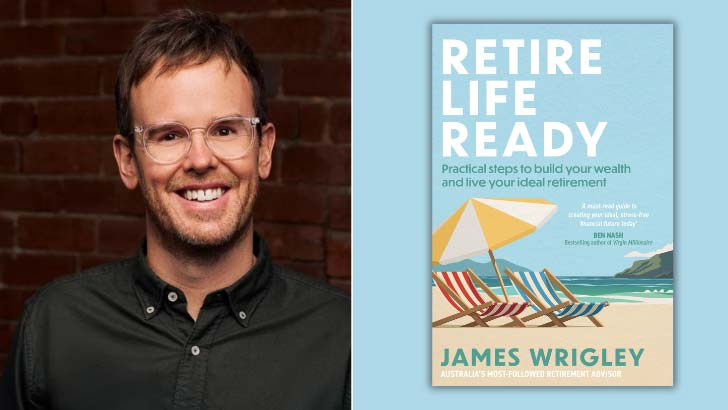
This is an edited extract from Retire Life Ready: Practical steps to build your wealth and live your ideal retirement by James Wrigley (Wiley, $34.95).
Get stories like this in our newsletters.