Petrol prices tipped to rise as fuel tax relief shrinks




Petrol prices could soon top $1.80 a litre, the ATO is warning Australians not to rush their tax returns, and NSW is introducing tougher penalties for property underquoting. Here are five important money stories you may have missed this week.
Petrol prices could top $1.80 a litre
Fuel excise relief is being wound back from July
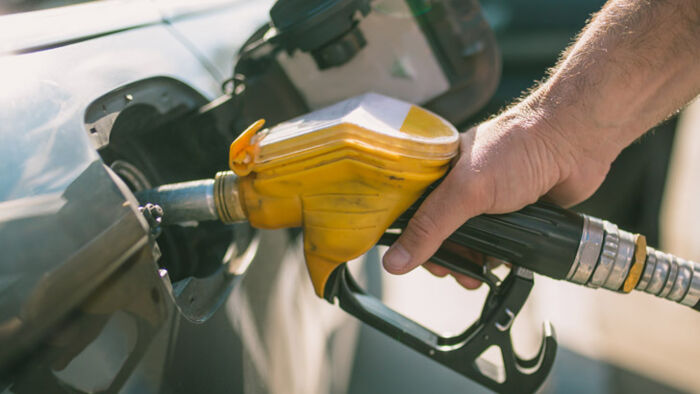
The fuel excise relief introduced in March was due to expire on June 30.
It has been extended by another month though not to the same value.
The current 32 cents a litre excise discount will be slashed to 16 cents in July, and cut out altogether at the start of August.
The scaled back relief is still expected to see Australians save around $11 on a 65-litre tank of fuel.
Motoring association - NRMA, says the price of a litre of unleaded petrol is likely to rise above $1.80, up from an average of about $1.65 in June, once the excise cut is halved.
Diesel prices could top $2.10 per litre, up from around $1.97 at present.
Of course, a lot hinges on the full reopening of the Strait of Hormuz - a major oil shipping route.
NRMA spokesman, Peter Khoury, says global oil prices have been falling: "The hope is if the peace deal holds and the strait opens we will see further falls."
ATO warns against lodging tax returns too early
Early lodgers are twice as likely to need amendments
In these cash-strapped times it's tempting to lodge your tax return ASAP and pocket a juicy refund sooner.
But the Australian Tax Office (ATO) is warning 'not so fast!'.
Lodging your tax return as soon as the calendar flips to July 1 brings the risk of incomplete and inaccurate returns, which can trigger a 'please explain' from the ATO.
The ATO pre-fills information into your tax return based on data gathered from your employer, banks, government agencies and health funds.
It takes time for all these organisations to pull together accurate data and send it to the ATO.
So, lodging your tax return early can mean getting these details wrong.
Last financial year, taxpayers who lodged before pre-fill details were available were more than twice as likely to have their returns amended.
That saw the ATO correct more than 140,000 individual tax returns where discrepancies appeared in employment income, interest, dividends, welfare payments, Medicare levy exemptions and private health insurance.
ATO Assistant Commissioner Anita Challen says taxpayers can save time and effort by waiting until all their pre-fill is available.
"Many taxpayers assume getting in first means getting a faster refund, but that is not always the case," explains Challen.
"Early lodgment increases the likelihood of missing information and mistakes being made, which can delay processing and require amendments."
The ATO recommends waiting until late July. By this stage, most pre-fill information is available.
NSW hits property underquoting with $110,000 fines
Homebuyers will gain more pricing transparency
The NSW Government has passed legislation cracking down on real estate agents underquoting homes listed for sale.
The new laws lift the penalty for underquoting from $22,000 to $110,000 or three times the agent's commission, whichever is greater.
Businesses that engage in dummy bidding at auctions will face a $110,000 penalty, up from $55,000.
In practical terms, it means no more homes advertised for sale with 'contact the agent' rather than stating a clear price.
Agents will also have to provide a Statement of Information (SOI) that shows how they arrived at the selling price, including comparable sales and the suburb's median sale price.
It's all designed to prevent prospective buyers wasting time on properties outside their budget.
The changes come six months after Victoria tackled underquoting through 'comparable property' guidelines, which call on agents to select three recently sold properties in the local area to compare against when setting an estimate of a home's selling price.
Robodebt victims to share $475 million payout
Australia's largest class action reaches final stage
This week saw the Federal Court approve a $475 million compensation payout to be shared between 125,000 registered Robodebt victims.
A further $60 million will go to funding administration of the payouts, and an extra $13.5 million is earmarked for legal fees.
Law firm Gordon Legal, says the new settlement (totalling $548.5 million) is in addition to the $112 million paid in the original class action, plus Robodebts forgiven, cancelled or repaid.
This final judgement will see more than $2.4 billion clawed back for the benefit of Robodebt victims.
The disastrous Robodebt scheme, which ran from mid-2015 to late 2019, saw Centrelink aggressively pursue hundreds of thousands of Australians for 'overpayments' of social security payments calculated using income averaging.
ASIC exposes car loans with rates as high as 22%
Some borrowers paid more than $9000 in fees
Following an increase in complaints about car loans, the Australian Securities and Investments Commission (ASIC) checked out 350,000 loans across eight car finance providers, including some of Australia's largest.
The results are not pretty.
ASIC found interest rates on car loans can range from 10% to a whopping 22%.
Loan fees can be punishing too, with establishment fees ranging from $299 to $995, plus a distributor establishment fee ranging from $912 to $2500.
One lender imposed a third fee, with one customer paying over $9000 in fees on a $49,162 car loan.
This included over $7800 in fees to the lender and $1320 to the broker - around 18% of the total loan amount.
Hardship provisions can also be sketchy.
In a sample of 250 loans where cars had been repossessed, 90% of consumers still owed over half their total loan amount, and in some cases over 100% of the loan amount.
ASIC Commissioner, Alan Kirkland, says, "'If a large proportion of customers are falling behind on repayments early, it raises serious questions about whether those loans were appropriate in the first place and how lenders conduct their affordability checks."
ASIC's intervention has already driven some changes across the car finance sector, but it's a cue for motorists buying a car to take a good look at the fine print - and fees - of any car finance they sign up for.
Get stories like this in our newsletters.