'More likely to be charged a fee': the new truth about ATMs




About to withdraw money for the first time in years? Cash discounts might be back following the card surcharge ban, but here's what you should know first about the current state of Australia's ATMs.
How many ATMs are there?
There are currently around 22,000 ATMs in Australia, down from a peak of over 32,000 in late 2016.
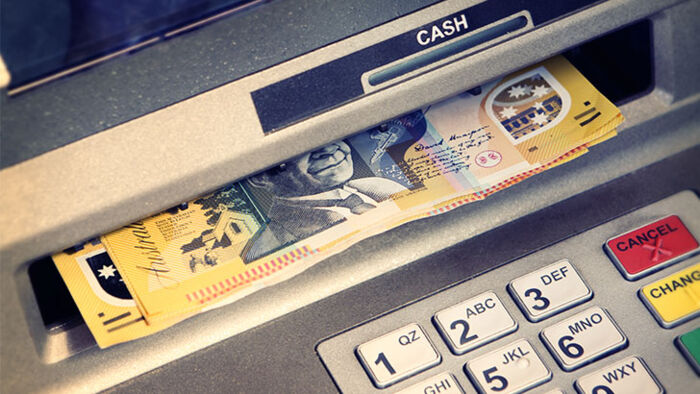
Much of the fall has been due to a significant decline in the number of machines operated by the nation's major banks.
There were just under 5000 bank-run ATMs spread around the country in June, less than half the number of seven years ago.
Swinburne University payment system expert Professor Steve Worthington says this is largely due to big banks shrinking their branch networks.
"If banks close a branch, it's quite common they also close the ATMs at that location at the same time".
The number of ATMs not affiliated with banks, meanwhile, has remained steady, giving independent operators an increasingly large share of the cash machine market.
This has been driven by shopkeepers and pub and club owners installing ATMs run by third-parties in their businesses.
Experts say this is because these machines charge more fees than bank-operated ATMs and give business owners the opportunity to earn money.
How much are ATM fees?
In the 2010s, banks made agreements to not charge each other's customers for using their ATMs.
But experts say the fall in bank machines and rise in independent ATMs means fees have once again become common.
"If it's an independently-owned ATM, it is much more likely, in fact it's almost certain that users will be charged a fee, says Stuart Hall, chief operating officer of banking group NGM.
"Typically, you'll be charged something like $2 or $3.50".
How to avoid ATM fees
- Stick to your own bank's network - See if your bank has its own ATMs. You shouldn't be charged to withdraw money from these machines.
- Look for another bank's ATM - Most Australian banks no longer charge non-customers for withdrawals, so look for a machine carrying the logo of a well-known bank brand.
- Check rebate deals - See if your bank has any arrangements where you'll be refunded any ATM withdrawal fees charged to your account. These will save you money if you have to use an independent ATM.
Avoid credit card cash advance fees
Another easy way to avoid being stung with charges is to be careful with what type of bank card you're using to get cash out.
"Make sure you're using your debit card to do the withdrawal, not your credit card" says Hall.
This is because credit providers treat taking cash out differently to a regular purchase, meaning any interest-free arrangements may not apply.
"A credit card withdrawal at an ATM is a cash advance and you will pay interest on it from day one," Hall explains.
Credit, cheque or savings: Which ATM account option should you choose?
Sticking your card into an ATM, you might be asked to select what type of cash withdrawal you want to make.
The options on the screen will be some variation of: Savings/debit, credit or cheque.
Hall recommends being careful here too, at risk of accidentally drawing down on your credit account.
"Don't hit the credit option, because that's your credit card. If [your savings account] is linked to that, you'll pay interest," he warns.
So play it safe by only selecting savings or debit. And the cheque option?
"Relatively few people have got a cheque account these days," Hall explains.
"And if they have got one, they probably know".
Can you use your phone instead of an ATM card?
Banks are continuing to upgrade their ATM networks, meaning more can be used with the digital wallet on your phone or smart device.
But as Hall notes, some machines in Australia can be up to 20 years old, so it's still a good idea to have an old-fashioned back up.
"There are still plenty of machines where you need a physical card," he says.
Should you worry about card skimming?
State and federal police have arrested several people in recent years accused of tampering with ATMs in order to steal users' card details and personal data.
Common scams involve fitting card slots with devices that glean information about your card, which criminals can use to make a copy.
Scammers might also hide cameras on parts of the machine to capture your PIN as you enter it.
Professor Worthington says card skimming and other ATM scams aren't overly common in Australia, but recommends staying alert to them.
"We should be worried about it happening, but I wouldn't put it very high on the list of potential scams," he says.
Stuart Hall from NGM Group recommends closely inspecting any ATM you haven't used before and checking for any signs it's been tampered with.
"Have a good look at the machine: Does it all look reasonable and appropriate?"
And to avoid hidden cameras: "I know this sounds a bit stupid, but I always still make a point of covering my hand when I'm putting my PIN in," he admits.
Get stories like this in our newsletters.