What to do when your bank goes down




Bank outages can strike without warning, leaving customers unable to make payments, transfers or access their money. Here's how to prepare, protect yourself and avoid being caught out.
Imagine you're in line at the supermarket with a trolley full of groceries, or inside the petrol station after filling up your car.
You go to pay with your mobile wallet, but it doesn't work. Neither does your physical debit card. Your account has plenty of money in it, so what's going on?
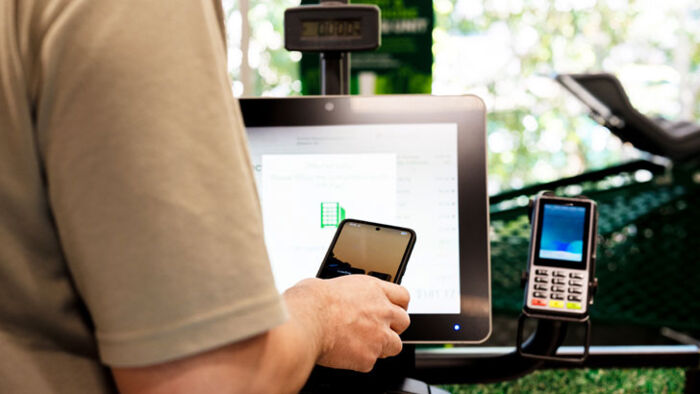
The issue - as many Australians have found out in recent years - is a bank outage.
While they are often resolved within a few hours, there's never a convenient time to be left unable to make payments, transfers or access your money.
So how can you protect yourself before your bank goes down, and what should you do if you get hit by a bank outage? There are a few steps you can take.
Why bank outages feel more common than ever
Last Tuesday, thousands of Westpac customers found themselves unable to make payments and transfers as a result of an issue with the Westpac app and online banking platform.
It's just the latest in a string of incidents in recent years.
Perhaps the most impactful was the CrowdStrike outage back in 2024 which not only affected some of Australia's largest banks, but supermarkets and other retailers.
Professor Angel Zhong, deputy dean, research and innovation, at RMIT's School of Economics, Finance and Marketing, says that outages are becoming more visible, rather than more frequent.
"There's data to back that up. The latest is from an RBA study in October 2024 which found that while outages were getting longer, the number of incidents had fallen.
"The overall reliability - the average availability of banking services - was 99.8% per quarter."
Zhong suggests that changes in the way Australians are banking and managing their finances could be shaping the perception of outages.
"There's a theory in behavioural finance called salience theory which suggests that people give disproportionate weight to events that stand out against the norm.
"As we know, in Australia and globally, consumers are increasingly relying on digital payments.
"So, when outages happen, people feel the pain and remember the failure, not the thousands of payments that went through."
How to prepare before your bank goes down
While infrequent, outages do happen.
Rather than being left stranded at the checkout, there are a few measures banking customers can take ahead of time to limit the inconvenience.
Bank outage survival checklist
- Carry some emergency cash
- Have a backup bank account
- Keep a second credit or debit card
- Take screenshots of failed transactions
- Stay up to date via official bank channels
- Watch out for scam texts, emails and calls
- Contact your bank if you're left out of pocket
1. Keep emergency cash on hand
First and foremost, Zhong suggests having access to some emergency cash which you can utilise in situations when card payments aren't working.
2. Have a backup bank
Zhong also suggests having access to a second bank account and card from an alternative bank.
"Sometimes an outage will only happen to one bank, if it's not a systematic failure. So having an account or card with a different bank can provide a buffer."
When choosing a backup, Zhong recommends looking outside of the banking group you're already with. For example, if you bank with Westpac, you might avoid Bank of Melbourne or St. George.
3. Diversify your card options
For extra protection, it may also be worth choosing a second card that uses a different payment network to your main card.
For instance, you might opt for a Mastercard if you already have a Visa card, and vice versa.
What should you do during a bank outage?
If you suddenly find yourself caught up in an outage, Zhong says that there are a few things worth doing (and avoiding).
1. Don't go into panic mode
Her number one tip is not to panic about your money.
"If it's just an outage, it will affect your access temporarily, but it won't affect your balance."
2. Keep an eye out for scams
"If you panic, you're going to be more liable to fall victim to scammers who take advantage of people during these events," Zhong says.
To give scams a miss, she recommends ignoring suspicious emails, texts or calls you receive claiming to be from your bank.
Instead, stay up to date through official channels like the bank's website or verified social media accounts.
3. Resist the urge to retry payments
Bank customers will also want to avoid making the mistake of trying to push through the same payment or transfer again and again, Zhong says.
"You could end up locked out of your account. Or, if the transfer is queued, it could end up going through multiple times when the system recovers."
4. Keep a record of payment issues
"If you are in the midst of making a payment and it doesn't work though, take a screenshot of it," Zhong suggests.
"That way if that payment goes through several times, you can use that as proof to get your money back."
Can you be compensated for a bank outage?
Bank outages are frustrating for anyone affected, but in some cases, they may leave customers out of pocket.
For instance, an outage could cause you to miss a bill payment, incur a late fee, overdraw your account or make a duplicate payment.
In any of these situations, it's worth contacting your bank first to see if you can resolve the issue.
If that doesn't work, you may want to consider lodging a complaint with the Australian Financial Complaints Authority, as AFCA can assess complaints about system outages related to financial loss.
Bank customers can lodge a complaint online through the AFCA complaints portal, or they can call, email or send a message online to AFCA for further support.
Have you ever been caught up in a bank outage? Did it stop you paying for something important, or do you already keep a backup bank account and emergency cash? Tell us in the comments below.
Get stories like this in our newsletters.