Why Japanese stocks outshine US tech




For investors keen to step offshore, the US share market might seem like the obvious option.
It's understandable why investors favour the US - it accounts for 70% of the global share market and has been one of the best-performing share markets over the past 10-15 years.
But there is much more on offer in global share markets outside of the US - just consider the Japanese stock market, home to some of the world's best-known brands. With the country's recent shift from decades of deflationary stagnation to sustainable earnings growth and shareholder return, now might be an opportune time for investors to pay attention to the land of the rising sun.
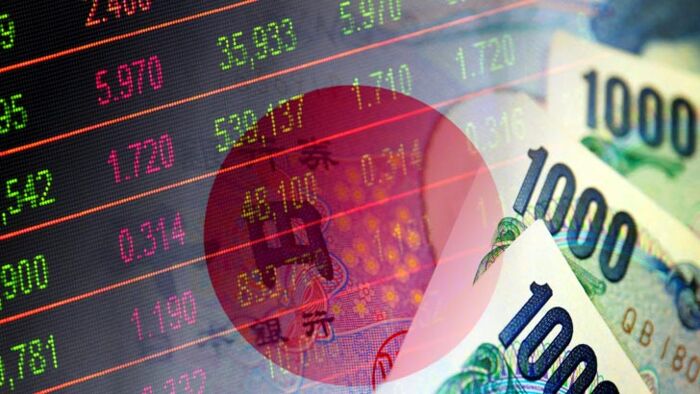
Japan's market surge: Key drivers in 2025
Just consider that several large Japanese companies have had stronger returns so far in 2025 than the likes of market darling Nvidia, including Softbank, Mitsubishi Heavy Industries, and semiconductor supply company Advantest, for example.
Advantest has surged 125% so far this year to December 3 as more money is directed to companies linked to artificial intelligence (AI). Its 10-fold gain over five years has seen it become Japan's eighth largest company.
Elsewhere, industrial conglomerate Mitsubishi Heavy Industries has returned around 75% so far in 2025 compared to Nvidia's 20% gain, and soared more than 1500% over five years, compared to Nvidia's 1228% rise.
The top Japanese companies outperforming Nvidia
And while you may not have heard of SoftBank Group, a Japanese multinational investment firm, it has gained around 75% YTD and is headed by famed investor Masayoshi Son, who famously backed Alibaba, Uber and Yahoo, as well as Nvidia.
He recently sold his entire stake in the world's largest company for around US$5.83 billion to invest in other AI projects, including OpenAI.
Japan vs global markets: the numbers
More broadly, the Topix 100 Index, which tracks the largest 100 companies in Japan, has easily outperformed the US share market so far in 2025 with a 24% return compared to the Nasdaq Composite's 20% gain, the S&P 500's 16% rise, the S&P/ASX 200's 7% rise and 18% for European shares.
Japan has been one of the best performing developed markets over the past five years too.
Sectors powering Japan's growth: AI, autos and more
Importantly for investors seeking quality as well as growth, Japan is home to many well-known brand names such as Sony, Nintendo, Toyota, Honda, and Mitsubishi.
The nation's share market is exposed to important global sectors showing robust growth, including AI/semiconductors, electronics, gaming, automotive, defence, and industrial machinery.
Many of us wouldn't get around without our Japanese cars or enjoy life as much without Japanese electronics.
Toyota, Japan's largest company, is the world's largest carmaker and with Honda, both are attractively valued relative to European peers, trading at lower valuation multiples while maintaining strong profitability and global scale.
Sony, Japan's third largest company after Mitsubishi UFJ Financial, is known globally for reliability in electronics and household appliances, a reputation it has built over decades. Nintendo, Japan's 10th largest firm, is now leveraging AI for advanced gameplay.
While a far cry from Tetris, which Nintendo secured the rights to put on its Game Boy, Nintendo is the world's video gaming leader after bringing portable gaming to the masses. And it's a stayer, with Super Mario celebrating its 40th anniversary this year.
Mitsubishi Electric and Hitachi are also global leaders in industrial automation, robotics, and AI-powered factory solutions supporting manufacturing and smart infrastructure.
Household cash shift: A catalyst for equities
The tourists have flocked to the nation to travel, but many investors aren't aware of the favourable dynamics underpinning the nation's stock market.
A key factor is that Japanese households may potentially start shifting from cash hoarding to putting money to work in their local share market.
With households and corporations traditionally holding large cash/deposit balances (a legacy of decades of deflation), rising wages and inflation make cash less attractive, and many Japanese savers may be redirecting funds into equities, especially via retail investor schemes and growing stock buybacks/dividends from Japanese companies.
For global context, Japanese households keep around 51% of their assets in cash, compared with about 12% for US households, and Japanese households hold only 18% in equities and investment trusts, versus around 55% in the US.
Valuation reset: Why Japan looks attractive now
A valuation reset is also adding to the potential for robust equity gains.
Many companies have been "undervalued" under the old regime of deflation, but a structural shift towards greater economic growth, inflation, better governance, and a renewed focus on shareholder returns provides a chance for an upside re-rating, making Japanese equities look increasingly attractive relative to global peers.
Despite a long period of deflation and slower GDP growth, Japanese corporate earnings have largely kept pace with global peers over the past few years, supported by cost discipline, export competitiveness, and structural reforms.
How Australians can invest in Japan easily
So, the outlook is bright in Nippon, the Land of the Rising Sun. For investors, it is accessible too.
ETFs offer the most cost-effective way to access large Japanese companies. Global X has recently launched the Japan TOPIX 100 ETF (ASX: J100), the first ETF in Australia to track Japan's premier TOPIX 100 index and the lowest-cost option on the market.
The ETF offers exposure to 100 of Japan's largest and best-known companies and provides a simple way for Australian investors to access Japan's blue-chip core at a pivotal moment for the region.
ASX-listed Japan ETFs recently recorded their highest monthly net inflows on record - a sign that momentum may already be turning.
As investors, it often pays to "skate to where the puck is going". Japan could be one of those markets to watch in 2026, with structural reforms, improving corporate governance, and attractive valuations positioning it for a potential return to favour.
Get stories like this in our newsletters.