Why you could soon be paying more to install solar




Would you pay a bit extra to install home solar if it meant your panels could be recycled once you're done with them? Plus, Uber Eats and Deliveroo say having to pay workers more won't lead to price increases and JB Hi-Fi blames AI for expensive appliances. Here are five money stories you may have missed this week.
Solar panel recycling fee could increase installation costs
It would only be a small increase, but Aussie households would have to pay more to install solar under one suggested plan for tackling the country's growing number of discarded panels.
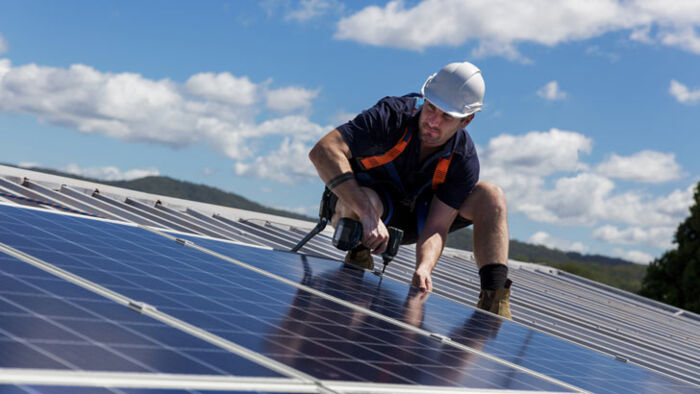
A national science organisation says a fee charged on solar panel importation, installation or disposal could encourage consumers to choose better systems and ensure more panels are recycled.
In March, the federal government told a parliamentary inquiry into panel waste that Australia is facing a "significant wave of end-of-life rooftop solar systems".
Solar panels contain small amounts of silver, silicon, copper, gold and tin, but only a small proportion of them are currently recycled because extracting and reusing the minerals contained within isn't considered economically viable.
Peter Derbyshire, acting CEO of the Australian Academy of Technological Sciences and Engineering, says a fee of "between $10 and $20 per panel" to install solar or have panels disposed of could fund a stewardship program that would see more solar panels recycled.
Depending on the brand, a single solar panel currently costs between $130 to $290, according to the latest data from Solar Quotes.
Alternatively, Derbyshire says the fee could be levied when the panels are imported, with the charge depending on how easy they'll be to recycle.
"It does make the cheaper ones a little bit more expensive, but I think it also solves the problem and creates that opportunity for greater research and development into these new solar panels that could be more reusable," he says.
10,000 Australians warned after crypto scam data breach
More than 10,000 Australians are at heightened risk of being targeted by scammers after their personal details were found by police investigating cryptocurrency criminals overseas.
The National Anti-Scam Centre (NASC) has contacted the local users of cryptocurrency exchanges and wallets whose information was found by UK authorities cracking down on crypto scammers.
NASC says British police recovered the personal contact details of more than 10,000 Australians while arresting members of an organised crime syndicate seeking to steal funds from crypto investors in several countries.
The national scam-fighting body says that while the original scam operation had been shut down by UK authorities, the personal details of the Aussie targets could "still be circulating among criminal networks" and might be picked up by a new group of fraudsters.
NASC is contacting those whose details were leaked by email and urging them to beware of any new attempts to scam them out of their savings.
Will higher wages for gig workers deliver more expensive food and groceries?
Since Monday, food and grocery delivery workers have been enjoying new national standards guaranteeing them higher pay and insurance protection.
The changes brought in by the Fair Work Commission require platforms like Uber Eats and DoorDash to pay riders and drivers at least $31.30 per hour while they're making deliveries.
That's higher than Australia's minimum wage, and higher again than what unions say the workers received when they were considered independent contractors and not covered by standard worker protections.
The platforms will also have to provide personal accident insurance to their workers.
Unions and delivery companies came together to welcome the reforms, which they had spent years negotiating on, but will they mean you'll have to pay more to get your food or groceries delivered?
The platforms say no - in a statement, Uber Eats managing director for Australia and New Zealand Ed Kitchen said the company will deal with the changes by "driving operational efficiencies, rather than defaulting to increasing delivery or merchant fees".
A spokesperson for competitor DoorDash told news.com.au it also wasn't planning any price increases and would "look for operational efficiencies elsewhere".
AI data centre boom driving up laptop and appliance prices: JB Hi-Fi
If you've noticed prices for tech and appliances shooting up recently, AI might be to blame.
This week, leading tech and appliance retailer JB Hi-Fi said prices charged by its suppliers for products like laptops had risen by as much 50% due to a shortage of memory and storage components.
CEO Nick Wells told an investor call that demand for more computing power from data centre operators trying to keep popular AI platforms running was one of the causes of the shortage.
"The demand for hardware used in AI data centres is sucking up a lot of the memory supply, so memory prices have increased significantly, and that is driving costs higher and making PC prices higher," he said.
Wells said JB Hi-Fi has tried to limit these higher costs from reaching shoppers (the retailer's gross margin was down over the year to July) but admitted "prices are flowing through" to consumers.
Cinema attendance returns to pre-COVID levels as younger audiences flock to movies
How busy is your local cinema? Despite national data showing fewer of us going to the movies on a regular basis, one cinema group says attendance has reached a new high.
According to NAB, its business customer Moving Story Entertainment has recently seen attendance across its Classic, Lido, Cameo and Ritz Cinemas exceed pre-pandemic levels.
"One of the biggest surprises for us has been the strength of younger audiences," says Moving Story Entertainment head of marketing Jaymes Durante.
"We were often told younger audiences belonged to streaming services, but what we're seeing now is the opposite. They're turning up on opening weekend because they want to experience these films while everyone is talking about them."
It comes as big releases like The Odyssey have brought more people to cinemas - the Commonwealth Bank says the Christopher Nolan blockbuster helped drive recreation spending 1.1% higher in July, the month it was released.
But take a longer-term look at Australia's cinema industry, and it isn't such a rosy picture.
According to Screen Australia, while the proportion of us going to the movies at least once a year has recovered from a COVID low of 36.5% in 2021, the close-to 60% rates seen since 2023 are still well below the most recent peak of 72% in 2004.
Get stories like this in our newsletters.