The money leaks costing Australians right now




Coles found guilty of misleading discount claims
The Federal Court has found Coles misled shoppers with false discount claims tied to its 'Down Down' promotion.
In late 2024, the Australian Competition and Consumer Commission (ACCC) took Coles to court over alleged sham discounting.
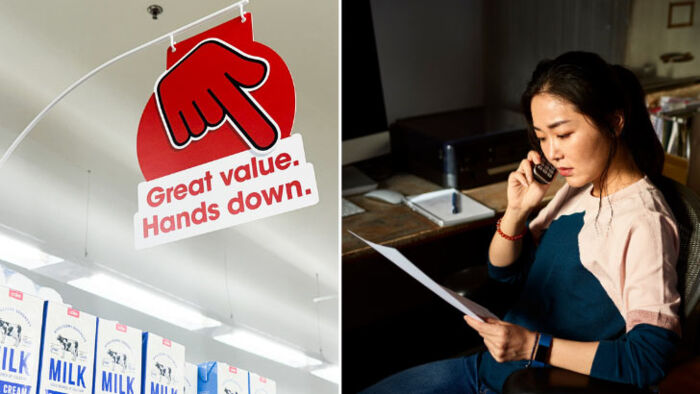
The ACCC claimed Coles temporarily increased prices on a range of products, in some cases by up to 15%, before lowering them and marketing the drop as a significant saving.
In some instances, the so-called 'discounted' price was the same as, or even higher than, the product's original price.
In its ruling, the Federal Court found Coles had made misleading claims about price discounts, a decision likely to prompt retailers across Australia to review their pricing strategies.
ACCC chair Gina Cass-Gottlieb welcomed the outcome, saying the 'Down Down' campaign made it harder for shoppers to identify genuine value when buying everyday essentials.
The ACCC says it had received consumer complaints about Coles' discounting practices before launching legal action.
"We understand how important it is for consumers to get value for their supermarket purchases, and decided to take action to test these practices in court," Cass-Gottlieb says.
Penalties against Coles are yet to be determined.
While the ruling may seem like a win for rival Woolworths, the ACCC is also pursuing similar action against the supermarket giant. A decision in that case is still pending.
Will housing prices slow under new tax rules?
Tuesday's Federal Budget introduced major changes to property investment, including limits on negative gearing and a shake-up to capital gains tax (CGT).
Negative gearing will now apply only to new builds, while the 50% CGT discount will be replaced by an indexation model and a 30% minimum tax rate on established properties.
Treasury estimates the changes could reduce investor demand and slow property price growth by around 2% over the next few years.
But Australia's largest home lender, Commonwealth Bank, is not forecasting a sharp downturn.
CBA expects national home prices to rise by 3% in 2026, with similar growth of 3% forecast for 2027.
Separate analysis by REA Group suggests not all investors will lose out under the new CGT rules.
It found that over the past decade, 27% of properties that recorded a capital gain would have delivered a better outcome under the indexation model than the current 50% discount.
Why your savings may be going backwards
You'd think three rate hikes in as many months would be good news for savers. But that's not always the case.
Research from Money.com.au shows almost half of Australians, 47%, don't know whether their savings are going backwards.
Here's why it matters.
With inflation at 4.6%, your savings need to earn at least 4.6% just to maintain their purchasing power.
Right now, only 12% of Australians say their savings are beating inflation, while 26% admit their returns are falling short.
Money.com.au finance expert Sean Callery says many savers underestimate how quickly inflation can erode cash.
He notes that fewer than one in three savings accounts currently offer rates above inflation.
"That means the odds aren't in people's favour unless they're actively seeking out a competitive rate," Callery says.
The good news is that higher rates are out there if you know where to look.
Among the top savings accounts:
- Easy Street Financial, 5.05% ongoing
- MyState Bank, 5.40% for 4 months, then 5% ongoing
- ING Savings Accelerator, 5.65% for 4 months, then 4.6% ongoing
- Macquarie Bank, 5.10% for 4 months, then 4.75% ongoing
- Rabobank, 5.90% for 4 months, then 4% ongoing
This airline wants to cut check-in times by 50%
Cutting check-in times isn't just about saving on airport parking. It can also mean more time to relax before your flight.
Virgin Australia is aiming to do both, with new digital upgrades designed to cut airport check-in times by up to 50%.
In what the airline calls an "Australian airline-first", new bag tag printers will be paired with automated bag drop.
Travellers will simply scan their boarding pass, print a bag tag and drop off their luggage, streamlining the entire process.
The upgrade is expected to significantly reduce queues, though passengers will need the Virgin Australia app to access the new system.
Virgin Australia general manager of digital Alex Plummer says the rollout marks a major shift in how travellers move through airports.
"Today's update is a major step forward, allowing customers to check in, manage their booking and move through the airport in a way that's never been done before by an Australian airline," Plummer says.
He added that nearly four in five Virgin Australia passengers already use the airline's app or website to check in and manage their bookings.
'Natural' food labels face calls for tighter rules
Back in 2024, Monash University found Australian shoppers are increasingly prioritising sustainability, with almost half (42%) willing to pay more for sustainable groceries.
But new research from the George Institute for Global Health highlights a lack of regulation around food labels such as 'natural', 'vegan' and 'eco-friendly'.
UNSW associate professor Alexandra Jones says the findings point to an urgent need for reform.
"Terms like 'natural' and 'sustainable' sound meaningful, but without clear definitions or verification, they can be applied to almost anything," she says.
"That's not useful information. It's just marketing."
Researchers are now calling on Australian policymakers to introduce stronger rules around sustainability labelling.
In the meantime, consumers are being urged to read product labels closely to better assess how sustainable a product really is.
Get stories like this in our newsletters.