The money stories Aussies missed this week




$9000 for Australian Open seats, the six-figure cost of a private school education, and two in five Australians can't pick a deepfake.
Here are five things you may have missed this week.
Australian Open 2026: What it'll cost you
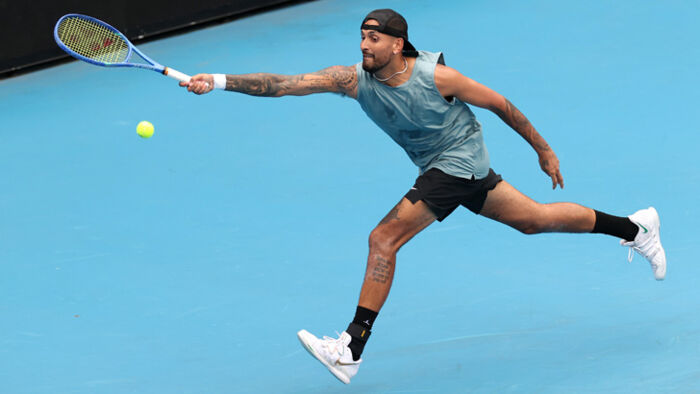
NAB says Melbourne's economy is set to enjoy a $600 million boost as hundreds of thousands of tennis fans descend on the city for the Australian Open.
Tickets to the Open start at $69, though expect to pay upwards of $499 for a seat at the women's final, or from $1449 for the men's final.
That's for nosebleed seats.
If you're after more of a courtside experience, top-priced tickets to the men's final cost $8999.
One way to enjoy the action free of charge is to volunteer as a 'ballkid'. Applicants must be aged 12-15 years, and presumably be able to dodge the blistering 200kph serves from Jannik Sinner.
With a $115 million prize pool, it could pay to brush up on your backhand.
Players who are knocked in the earliest stages of the Open's qualifying rounds still walk away with $40,500.
The true cost of schooling in Australia
The clock is ticking towards term time, and Finder says parents are expected to drop as much as $1166 on basic school supplies.
That could be the tip of the iceberg.
The real budget buster can be school fees.
At the higher end of the scale, Geelong Grammar is charging annual tuition fees of up to $55,380.
Sydney Grammar has an annual fee of $52,410 for students in years 7-12.
The vast majority - 2.6 million - of Australia's 4.1 million school children attend government schools. However, families opting for the local public school can still expect to dig deep.
Futurity Investments says 13 years of government school education can cost around $113,594 thanks to expenses like uniforms, camps, excursions, and laptops.
Head to the private system and the cost can escalate.
A Catholic school education (for one child) can set a family back $247,174 over 13 years.
Parents who opt for independent school are looking at an average total cost of $369,594.
It highlights the need to do some homework on what your family can afford.
According to Futurity, 57% of parents increasingly rely on third party support - often from grandparents - to fund education expenses.
Two in five Aussies can't spot an AI scam
Nearly nine in 10 Australians are confident they can spot an AI-generated scam.
But research from CommBank suggests the opposite is true.
It found Australians were only able to correctly distinguish between real and AI-generated images 42% of the time.
That's below the chance of a random guess.
It comes as AI-enhanced scams are exploding across social media platforms and websites.
James Roberts, CommBank's general manager of group fraud, says, "The findings reveal a growing gap between confidence and reality - and that gap is exactly what scammers are looking to exploit."
On the plus side, while deepfakes may be new, the steps to protect ourselves haven't changed
Roberts says, "Slowing down, checking details and speaking with someone you know and trust, such as a family member, remains your best defence - even against AI-powered scams."
Costly travel change for British- and Irish-born Aussies
There are 963,000 British-born and 103,000 Irish-born people living in Australia. Many have chosen to become Aussie citizens.
If that sounds like you, travel to the UK could become a lot more expensive.
And it has nothing to do with airfares.
From February 15, 2026, Australian-British or Australian-Irish dual citizens can only enter the UK with either their British or Irish passports, or have a certificate of entitlement in another valid passport.
These dual citizens cannot enter the UK with electronic travel authorisation or a visa, or an Australian passport.
If you're a dual citizen it pays to plan ahead.
Without a UK or Irish passport, or certificate of entitlement, you may not be able to board a flight. Airlines can cop hefty fines for bringing passengers with 'inadequate documentation' into the UK.
What sort of travel costs are you facing?
An adult UK passport costs from £94.50 ($190). Or pay from €75 ($130) for an Irish passport.
A certificate of entitlement will set you back £589 ($1184).
What's truly galling is that a third option - renouncing UK citizenship, costs £482 ($969).
So much for 'welcome back'.
Who's really making Australians bankrupt?
Despite years of telling my kids they'll drive me to bankruptcy, it turns out our offspring are no match for disgruntled creditors.
Research by Financial Counselling Australia (CFA) confirms the nation's single largest creditor is the Australian Taxation Office, initiating 13% of personal bankruptcies in 2024-25.
The big banks have largely stepped back, accounting for just 1% of bankruptcy cases last financial year.
But the gap has been filled by strata bodies (12%) and non-bank business lenders (12%), with car finance companies and private schools emerging as significant users of bankruptcy proceedings.
The scary thing is that individuals can be forced into bankruptcy by debts as low as $10,000.
Domenique Meyrick, CEO of FCA, says, "Without stronger safeguards and modernised laws, Australians risk losing their homes and livelihoods unnecessarily over relatively modest debts."
The FCA is calling for the bankruptcy threshold to be raised to $20,000 with annual indexation.
Get stories like this in our newsletters.