The biggest myth about Australian prenups




The Nvidia headlines have everyone talking about prenups. Family lawyer Georgia Miller explains how they work in Australia, what they cost and why some fall over.
When Nvidia chief executive Jensen Huang told staff this month that he had been unfaithful to his wife of 41 years, the headlines went straight to the money.
Could Lori Huang walk away with $US80 billion? Did they sign a prenup?
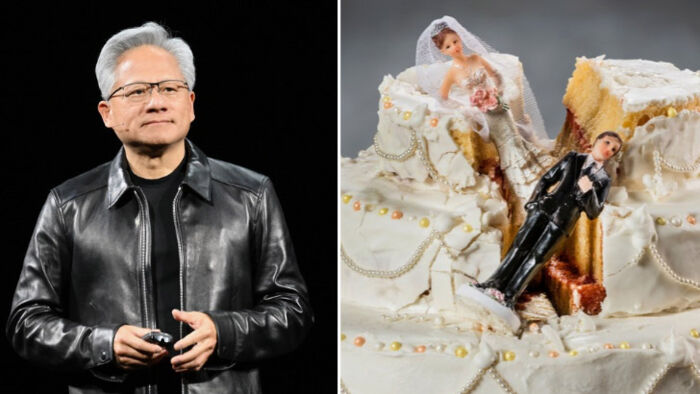
Those headlines come from a very different legal system to ours. Australia has no default 50/50 split, and that difference is exactly why prenups matter here.
There is no 50/50 rule in Australia
Here, there's no formula. If a separating couple can't agree, a court looks at everything they own between them, what each person contributed (including raising children and running the home) and what each will need in the future.
Who had the affair doesn't change the outcome.
Australia has had no-fault divorce for half a century.
The result is a system that's flexible but hard to predict.
Two couples with similar assets can walk away with quite different outcomes. A prenup is how you swap that uncertainty for a plan you've written yourselves.

What a BFA actually is
"Prenup" is the American term. In Australia it's called a binding financial agreement, or BFA.
It's a private contract between two people that sets out how their property, super and other finances will be divided if they separate. Where a valid agreement covers an asset, the court no longer has the power to divide it.
You can make one before you move in together, before you marry, during the relationship or after it ends. De facto couples can use them too.
They're also more flexible than people expect. An agreement might keep everything separate, the "what's mine is mine" approach.
Or it might protect a single asset, like a home you owned before you met, a family business or an inheritance, and leave everything else to be shared.
One thing a BFA can't do is decide parenting arrangements. Child support also needs its own separate agreement.
Who should consider one
Anyone with something to protect, now or in the future. That often means:
- people who bought a home or built up savings and super before they met their partner
- business owners, and families with a business to pass on, especially those that involve business partners and other people
- anyone expecting an inheritance, or getting help from parents say for example with a deposit
- people entering a second relationship who want to protect what they have for their children.
Not everyone needs one.
If you're starting out together with little to your names and expect to build everything jointly, the law's default approach may suit you fine.
An agreement can also leave one person worse off than they would have been without it, usually the lower earner. That's another reason each of you needs your own advice.
Are they becoming more common?
BFAs are private documents and aren't registered anywhere, so there are no official figures. In my practice, though, the answer is yes, and two things are driving it.
The first is property. In 2025, the median age at marriage was 32.7 for men and 31.2 for women, according to the Australian Bureau of Statistics.
By then, many people have bought a home or built up savings and super of their own. That's very different from older generations, who often met young, started with nothing and built everything together.
The second is family money.
An estimated $3.5 trillion is expected to pass from Baby Boomers to their children over the next two decades, and plenty of it is arriving early, as help with a first home. Increasingly it's parents who start the conversation.
They want to help, and they want to know the money will stay with their child if the relationship ends.
Do they hold up in court?
BFAs get a lot of criticism, and in my view they shouldn't.
There's a stubborn myth that prenups aren't worth the paper they're written on. In my experience, agreements that are prepared properly do hold up. The ones that fail usually fail for reasons that were avoidable.
They're the best form of protection available, but they're not an ironclad guarantee. Either person can still apply to a court to challenge one, which is why getting it right at the start matters so much.
To be binding, an agreement must be in writing and signed by both people.
Before signing, each person must get independent legal advice from their own lawyer about how the agreement affects their rights, and its advantages and disadvantages.
Each lawyer then signs a statement confirming that advice was given, and the statements are exchanged. Miss a step and the agreement may not be binding.
It's also worth knowing that an agreement doesn't have to be an even split to be binding. That's why the advice matters. You need to understand what you're giving up before you sign.
Can they be challenged?
Certainly.
A court can set an agreement aside in limited circumstances. The main ones are fraud, which includes failing to disclose a significant asset, and pressure, such as duress, undue influence or unconscionable conduct.
An agreement can also be set aside if circumstances change significantly in relation to a child, and the child or the person caring for them would suffer hardship if it stood.
The best-known example is the High Court's 2017 decision in Thorne v Kennedy.
A wealthy property developer told his fiancée, who had moved to Australia to marry him, shortly prior to the wedding, that the wedding was off unless she signed.
Her own lawyer advised her not to.
She signed four days before the wedding.
The High Court later set the agreement aside and make specific remarks about the obvious pressure that she was under at the time. In other words, she felt as though she had no choice but to sign it.
The mistakes that undo them
Leaving it too late. An agreement signed in the weeks before a wedding invites the argument that someone signed under pressure. I tell clients to start the conversation at least 12 months out.
Hiding or undervaluing assets. Full and frank disclosure is what makes an agreement stick.
Doing it yourself. Online templates and one lawyer acting for both people don't meet the legal requirements.
Set and forget. Review your agreement after big changes, like children, an inheritance or the sale of a business.
What they cost
Each person needs their own lawyer. The cost will depend on how much (or little) detail goes into the agreement, and how complicated the agreed arrangement is.
For example, there are conceptual arrangements which seem simple but which are in practice complicated and fraught with uncertainty.
It is important to stress-test any suggested arrangement, and ensure that the agreement is bespoke to the couple's needs.
Nobody wants to spend money on lawyers while they're planning a wedding.
But whatever a BFA costs, it's usually a fraction of a contested property dispute in court, which can cost each person tens or even hundreds of thousands of dollars and take years. It's a reluctant expense, like insurance.
You pay for it hoping it stays in the bottom drawer.
The conversation is the hard part
Clients often worry that raising a prenup is unromantic.
I think the opposite. I see every day what happens when couples who once loved each other hand their future to a judge who has never met them. That's why I think a prenup is one of the most romantic things you can do.
It says to the other person, "if this ever ends, I want things to be ok between us. And you get to decide what that looks like together, while you're still on the same team."
Raising the idea of a prenup also prompts couples to have healthy conversations about their future, their financial goals and expectations, which can help create a very strong foundation for newlyweds.
Get stories like this in our newsletters.