I bought second-hand to save money, then this happened




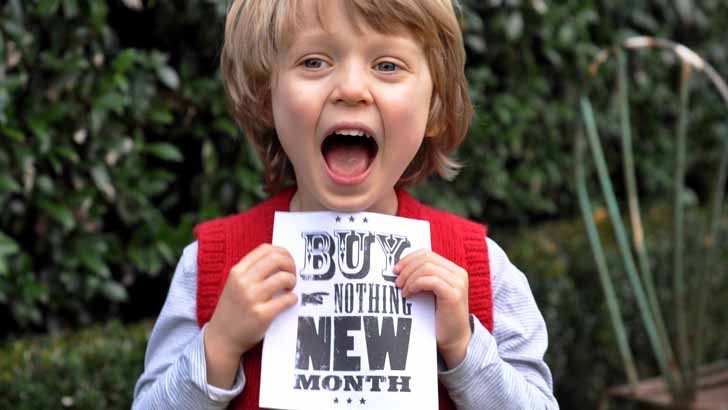
Buy Nothing New Month is back this October, so we're revisiting this column from founder Tamara DiMattina. What started as a way to stretch a tight budget ended up giving her more money, less stress and a completely different perspective on spending.
I'd always been stumped by waste. I'd look in shop windows as a kid wondering, "Where does this stuff come from? Where does it go when we're done?"
There were a few things that got me into buying second-hand first.
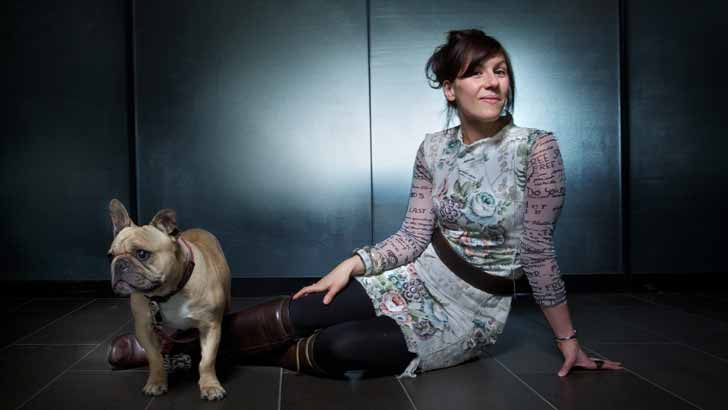
It started as a financial imperative 20 years ago when I was working at Sotheby's, London. I had to look smart - but they expected me to look champagne smart on a beer salary.
I started shopping in op-shops (the quality of London charity stores has always been really high), bought myself a second-hand sewing machine and learnt to sew.
Back then for me it wasn't environmental. I was actually a bit ashamed, as if I wasn't earning enough money to buy new clothes.
Now, even though I only buy second-hand, I feel ashamed if I source it at a market or on eBay, because it's not from a charity!
I love the fact that by buying second-hand from a charity store I'm getting something and giving something.
How I realised our waste comes at a cost
For five years in a row, my mates and I went to the Burning Man festival in the Nevada Desert.
You can't buy anything, you can't sell anything and its tagline is "Leave no trace". I started waking up to the "trace" or impact our footsteps leave on our planet.
In Dharavi, Mumbai's infamous slum, I saw where our "waste" from the West goes to get recycled. Because the people there have so little, they see our waste as a resource. In India, as in nature, nothing is wasted.
In Antarctica I went on an expedition to learn about sustainability and climate change.
All these experiences kept feeding the tiger in my belly that was starting to roar: "We're stuffing this up but there is an alternative to our wasteful ways that's not only essential but better for us, our people, our wallets and our planet."
So in 2010, when I was doing a fellowship at the Centre for Sustainability Leadership, I approached Salvos stores as my charity partner and launched the first Buy Nothing New Month.
How buying second-hand gave me more money and less stress
I have more time, more money and less stress.
Because I'm not spending money on stuff I don't need, I have money for the stuff I do need. Look around your home and your wardrobe. Everything was once money.
Could you have used that money more wisely or did you really need that hot-pink sequined kaftan?
It's also shown me the power we all carry in our pockets to create change.
Every dollar we spend is a vote for the world we support.
I was told years ago that Buy Nothing New Month was flagged in a Coles meeting as something they needed to keep an eye on.
Wow, who would have thought a girl and a laptop could be on the radar of a retail giant, just by spreading a simple message like Buy Nothing New Month!
The biggest challenge of buying less
At the start it was helping people understand the reason I'm not buying them a birthday or Christmas present isn't because I'm a tight-arse.
I'm trying to spread the message.
Most gifts are unnecessary, come in wrapping that gets thrown away, bring momentary "buzz" and are cool for a hot minute.
Our happiness comes from experiences, and connections with friends, loved ones and our community.
For some, the hardest part is identifying the difference between need and want. There is a big difference.
I think for some people it's getting over the dinosaur concept that second-hand is second best.
If you eat in a restaurant, are you the first to eat from that cutlery? In a hotel, are you the first one sleeping in those sheets or using that towel?
How to start buying nothing new
Easy! Just don't buy stuff!
While we promote buynothingnew.com.au during October, you can do it whenever you want.
With the exception of essentials such as food, hygiene and medical products (I include booze and chocolate as essentials. It's not Dry July, people) just buy nothing new.
The ripper thing is you can buy whatever you like as long as it's second-hand.
Host a swap party. Invite five mates. Everyone brings five things they no longer want/need (could be clothes, shoes, books, homewares, etc) and you swap 'em around. Not "new" but "new to you".
Buy Nothing New Month starts conversations around how we can have a splendid time but without the wasteful, harmful, unnecessary consumption.
We live on a beautiful planet with finite resources, and we're consuming like there is no tomorrow. Do you want to be part of the problem or the solution?
Once people nail buying nothing new and want to graduate to the next level, they can meet "the new Joneses" and learn all the other daily lifestyle choices we can make (from our choice of bank, energy company, electric vehicle to composting and raising chickens) that are good for our wallets, our people and our planet.
Why more Australians are rethinking consumerism
I'm seeing a massive leap in the right direction.
When I started Buy Nothing New Month, while there was overwhelming support I did have some people (politicians, media, retailers) attacking me, saying I was stupid and trying to ruin the economy. "What about the retailers?" and "What about the economy?" they would say.
We won't have any retailers or an economy without a safe, stable planet to live on.
The UK has nowhere left for its rubbish. Its landfill is full. The US is heading in the same direction. What then? Where will the stuff go?
Refuse, reduce, reuse, repair, rethink, recycle.
Get stories like this in our newsletters.
 Reply
Reply