Five money moves Australians can't ignore this week




Scammers recruit uni students as money mules, the $600 billion gold mine overlooked by over-60s, and 3 million drivers ditch car cover as fuel costs surge. Here are five things you may have missed this week.
Uni students targeted in 'quick-cash' money mule scams
As tertiary students across the country settle into the university year, ANZ and Griffith University, are urging students and young Australians to remain alert to a rise in so-called "quick-cash" money mule scams.
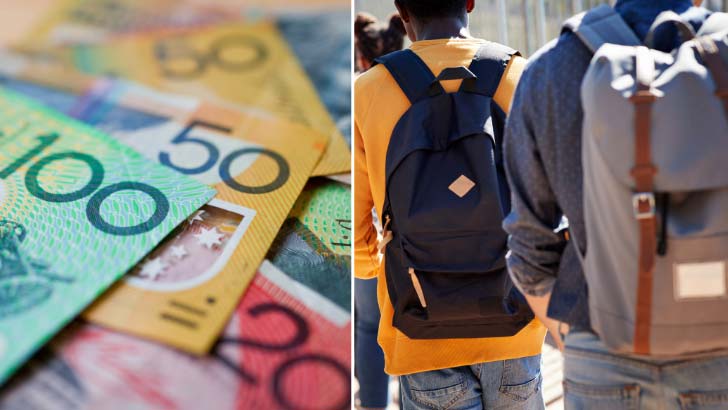
Criminal groups are increasingly targeting students - particularly those living away from home or studying internationally - both online and in person.
The crooks offer easy payments in exchange for access to bank accounts or identity documents.
The Australian Federal Police (AFP) has previously flagged this tactic as a growing threat to Australians.
According to the AFP, organised crime syndicates are offering several hundred dollars - sometimes with additional commission - for the use of bank accounts.
Identity documents such as passports and driver licences are also being sought so criminals can open fraudulent accounts in victims' names.
ANZ has observed increasingly brazen approaches, with scammers contacting students via social media platforms, messaging apps, and even in person near university campuses and student accommodation.
ANZ's Marc Broome, says, "Selling or 'loaning' your bank account or identity puts you at risk of being linked to money laundering and other crimes."
Over-60s sitting on $600 billion in home equity
Australians aged over 60 are sitting on $3 trillion in home equity, including around $600 billion that could be unlocked through equity release products, to boost retirement incomes and help older Australians stay in their homes.
That's the finding of Deloitte's 2026 Australian Reverse Mortgage Survey, which found reverse mortgages are currently used to access just 1% of the potential equity available among over-60s.
Deloitte Australia partner, James Hickey, says equity release products such as reverse mortgages and the government's own Home Equity Access Scheme can significantly boost retirement income and support retirees' standard of living.
However, he adds that use of these products is low, suggesting lack of consumer awareness.
Medina Cicak, chief commercial officer of Heartland Australia Bank, which contributed to the report, says, "Older Australians are not drawing more than required; on average, they access around 50% or less of their available equity."
The report shows that home improvements and paying off debt are the two most popular ways people use funds released via home equity.
One in seven Aussie drivers cut back or ditch car insurance as petrol costs surge
Fifteen per cent of Aussie motorists - around 3.2 million of us, have downgraded or ditched car insurance over the past 12 months as fuel costs surge according to Finder.
It comes as more than a quarter of Australians currently list petrol as one of their "most stressful" expenses. That's up from just 11% in January.
Finder's Taylor Blackburn says there is a worrying number of uninsured vehicles on Australian roads.
He adds that driving without sufficient insurance carries real financial risks.
"An at-fault accident could result in substantial out-of-pocket costs, particularly if multiple vehicles are involved.
"It's crucial for drivers to carefully consider their options before cancelling their cover entirely," warns Blackburn.
Not all drivers are cutting back - 10% say they switched providers to secure a better deal while maintaining the same level of cover.
Blackburn says the best way to save on car insurance whilst keeping your level of cover is to shop around.
NAB to roll out 700 new smart ATMs as cash use holds firm
NAB is bucking the industry trend with plans to roll out over 700 new smart ATMs nationally.
Paul Carter, NAB executive of retail banking, says the investment comes at a time when access to cash remains important for many Australians, even as parts of the banking sector scale back or step away from providing cash services.
"While many Australians are using digital banking more often, cash still plays an important role," notes Carter.
Across NAB's ATM network, more than 500,000 transactions are made every week, with over $8 billion withdrawn and $3 billion deposited in cash each year.
"Those numbers tell us cash is still very much part of everyday life," notes Carter.
Weaker borrowing power cools Australia's property price growth
Australia's housing market has continued to see gains into early 2026, with most capital cities reaching new price highs in the March quarter.
However, Domain's latest quarterly property price report shows the pace of gains has slowed, roughly halving from the previous quarter.
But it's not demand that's softened.
The cracks starting to appear in the market are the result of weaker borrowing power, and buyers being "more cautious, more price-sensitive, and increasingly selective about where and what they purchase."
Sydney's median price has slipped just 0.04%, or $772 - its first drop since 2022.
Melbourne's median slumped by 0.6% or $6,357.
However, not every market is feeling the squeeze.
Several capitals posted "massive growth" over the quarter including Darwin, where prices leapt $56,818; Perth, with the biggest rise of $63,615; Adelaide, up $53,922; and Brisbane, up by just under $50,000.
Get stories like this in our newsletters.

 Reply
Reply