From solar wins to 5.35% saving rates: What you've missed




Aussie roofs are the nation's biggest power generator, savers back in the box seat with 5.35% deposit rates, and the smart strategy families are using to bypass private school fees. Here are five things you may have missed this week.
How much households can save by joining a virtual power plant
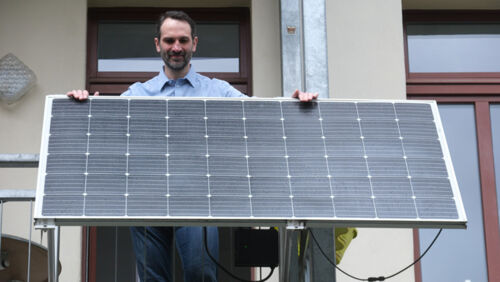
Australia's 4.3 million-plus households with rooftop solar now generate more power than the nation's entire fleet of coal-fired generators.

That's according to the Clean Energy Council, which says solar households have raced to install home batteries as a means of storing rooftop power.
The second half of 2025 saw 183,245 solar batteries sold - about the same number sold in the previous five years combined.
However, millions of households could be missing out on even bigger power savings because they're not part of a virtual power plant (VPP).
A VPP is a network of solar batteries that pump extra energy into the grid when it's needed - just like a power plant.
It's an option offered by a number of energy providers, and along with upfront incentives - AGL, for example, provides a $200 welcome credit - households can also expect generous bill credits by releasing stored energy to the grid via the VPP during peak periods.
The end result can be turbo-charged savings on power bills.
As a guide, the ACCC says households with rooftop solar plus batteries have average quarterly electricity bills of $323. This can be pushed down to $217 per quarter by signing to a VPP.
Under the federal government's Cheaper Home Batteries Program, home owners may be eligible for a 30% discount on the cost of solar batteries though the discount will start to dial down from 1 May 2026.
The bank offering 5.35% on deposits in 2026
The silver lining to the financial cloud of February's rate hike is higher returns for savers.
From February 10, 2026, Ubank, the digital arm of NAB, will pay 'welcome' interest of 5.35% (up from 5.10% at present) to new customers who joined from 11 November 2025.
It's one of the top rates in the market. And even after the 4-month 'welcome' period ends, savers can still earn 4.60% (up from the current 4.35%).
However, plenty of savers may not benefit from higher rates.
Research by Mozo shows three in five (59%) Australians have never switched savings accounts.
One in four (24%) last switched more than two years ago, meaning their spare cash could now be sitting in a low interest account.
Why families pay more to live near top public schools
As the cost of private schooling hits new highs, some Aussie families are taking a money-saving approach - buying a home in the catchment area of high-performing public schools.
It's a strategy that can see big savings on school fees but it still comes at a cost.
Angus Raine, executive chairman of Raine & Horne, says, "Evidence across the Raine & Horne network shows these families are often prepared to pay a price premium of 5% or more, to secure a property in the catchment zone of their preferred public school."
Based on today's national median property price of $912,465, Raine says a 5% premium can add more than $45,000 to the cost of a property relative to homes that may be only a street away but outside the school's catchment zone.
The upside is that properties in these catchment zones should deliver healthy capital growth over time, assuming families are prepared to pay a similar premium at some point in the future.
Momentum investing: How the new ETF works
You're probably heard of 'passive' investing that mirrors an index, or 'active' investing that aims to outpace market returns.
What you may be less familiar with is 'momentum' investing.
It's all about buying stocks that are on the way up, and selling those that are on the way down.
Sounds easy, right?
Except that it's not.
Momentum investing, often described as 'riding the wave', is research-heavy.
It can also be fraught with human biases as we have a tendency to hold onto dud shares in the hope they will come good.
The good news is that Betashares launched a new exchange traded fund (ETF) this week - the Global Momentum ETF (ASX:GTUM), that applies momentum investing to the sharemarkets of developed economies.
In essence, it prioritises shares with strong, consistent performance, while ditching underperformers.
The fund tracks the Solactive Developed Markets Ex Australia Momentum Select Index, which has recorded annual gains averaging 17.81% over the past five years.
Not surprisingly, GTUM's main holdings tend to be heavy hitters including General Electric, Alphabet (owner of Google), Palantir Technologies (a leading US software company), and HSBC Holdings.
It could be an opportunity to add the diversity of a different investment style to your portfolio.
GTUM has an annual management fee of 0.35%.
How much home renovations will cost in 2026
There's a reason your local hardware store is pumping on weekends.
Aussies collectively spend over $1 billion every month on home renovations.
With that sort of outlay, it's worth having a renovation budget in place.
That just got easier with the release this week of Archicentre's 2026 Cost Guide.
It sets out indicative costs of a range of building projects.
It can pay to have a stiff drink on hand when you take a look.
Fitting out a new bathroom can cost from $17,500.
Kitting out a kitchen can cost upwards of $23,000.
If you're thinking of extending your home, allow $2700 to $5100 per square metre.
The 2026 Cost Guide can be downloaded for free from the Archicentre Australia website.
Get stories like this in our newsletters.