Booked a holiday? Don't fall for these costly travel scams




Booked your summer getaway? Criminals are using stolen accommodation details and fake airline warnings to trick travellers.
Aussies have already lost more than $273 million to scams so far this year and the upcoming summer holidays show little sign of offering a reprieve.
Federal government bodies ScamWatch and Smartraveller have released advice on what scams to watch out for over the break.
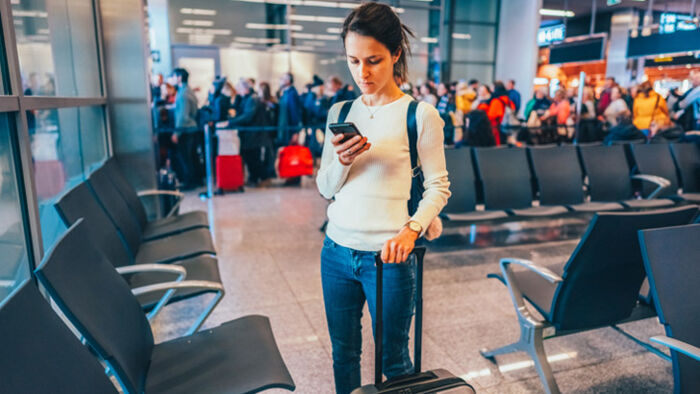
Many are designed to target you while you're planning your trip or even just as you're preparing to leave.
This trend doesn't surprise Dr Kris Iyer, an applied economist at Torrens University who has studied the work of fraudsters.
He says scammers now tend to focus their efforts on people going though a certain event, rather than trying to take advantage of a lack of awareness among some consumers.
"The new scheme is not to target intelligence, but to target timing," he says, adding that we're particularly vulnerable when planning travel.
"When you're busy or excited about a holiday, urgency beats the caution".
Dr Iyer says recent developments also mean today's cyber criminals are more likely to have access to some of the details of your travel plans.
This allows them to personalise their approach, making their requests for money all the more believable.
"They know your booking details, the scams look completely real and you pay because you were expecting to pay in advance [for your holiday] anyway," he explains.
1. Bogus booking confirmations
The most stark examples of scammers using travellers' own information against them are the malicious messages that appear to come from accommodation providers.
Smartraveller says Aussies should be watching out for these unexpected booking changes and requests for payment over summer.
These scams strike after you've reserved your stay and come in the form of a message from the business you've booked with.
It'll urge you to make a payment or provide personal and financial details in order to confirm or secure your reservation.
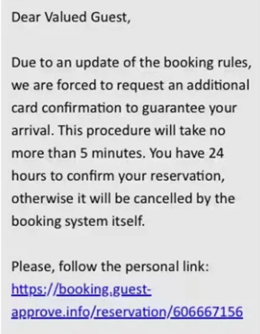
In one example shared by Western Australia's government ScamNet service, guests of a hotel are asked to provide "additional card confirmation to guarantee arrival."
If they don't within 24 hours, the message says, their booking will be automatically cancelled.
Dean Williams, APAC Principal System Engineer for cyber security company Norton says data breaches are allowing criminals to send these messages.
He says the leaking of guest records and booking dates when an accommodation business is compromised lets scammers personalise and time their approach.
"They're able to harvest real travel data," he explains.
"Then, right before you travel, an email that requires urgent attention pulls at the heartstrings and because travelling is very expensive, we jump on it and take action".
How to avoid bogus booking confirmations
1. Beware of urgent requests for action: Be suspicious of an accommodation business you've booked with suddenly asking you to pay extra money or provide information to secure your stay.
2. Don't click on links: Don't click on any links in these messages, even if they look like they've been sent by a business you trust.
3. Confirm suspicious requests: Contact your accommodation using details you've found yourself, such as a phone number, to confirm what you're being told. Don't reply to suspicious messages or use any contact details included within.
2. Phony airline rewards
Scammers are also playing on our anxieties about frequent flyer points and airline loyalty schemes -- topics that have provoked much discussion in recent months.
Much of the chatter has been among credit card customers scrambling after card providers made changes to how their products earn reward points.
Williams says scammers are exploiting these anxieties with fake messages designed to sow panic.
"Whether they're loyalty points or accumulated frequent flyer points, as a consumer we consider those hard-earned cash," he notes.
"Scammers are piggybacking on this major news [about credit card points] and hitting us at the right time, when we might need to take action".
ScamWatch has included fake warnings about airline points among its scams to look out for this summer.
It says you might receive text messages or emails warning your points are about to expire, requests to update your account or offers to earn extra points.
These messages will be made to look like they've come from a major airline and will contain links to pages designed to steal your information.
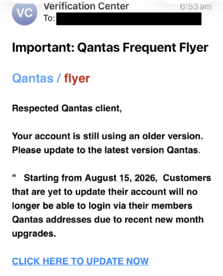
One recent attempt impersonating Qantas stands out for its poor grammar.
It urges recipients to click on a link to "update to the latest version of Qantas," or risk no longer being able to "login via their members Qantas address."
How to avoid phony airline rewards
1. Beware of urgent requests: Be careful of unexpected messages from your airline asking you to click on a link or call a number to protect your points or earn more.
2. Check the sender and link: Look at the sender's email address closely. A scam address may use the name of the airline, but with words misspelt or unnecessary complication. Hover over any links with a computer mouse to see where they lead to.
3. Consult official sources: Check your airline's website using a link you've found yourself and see if it has any warnings of ongoing scams. Confirm any information about points using contact details for your carrier that you've found yourself.
3. Fake visa websites
Heading overseas these holidays? You might soon find yourself investigating whether you'll need a visa and how you should go about getting one.
This can involve weighing up conflicting online advice and navigating clunky websites in hope of securing crucial clearance that will allow your holiday to proceed.
It's an environment ripe for scammers and unsurprisingly ScamWatch has listed fake visa websites as another of the scams to watch out for in coming months.
Fraudsters design these sites to appear in search results.
They may use them to sell you a visa for a country that doesn't require one or documents that are invalid or significantly overpriced.
The consequences can be significant: travelling with an invalid visa can see you denied entry to a country, deported or arrested.
In other cases, a website may take your money and personal details without providing anything in return.
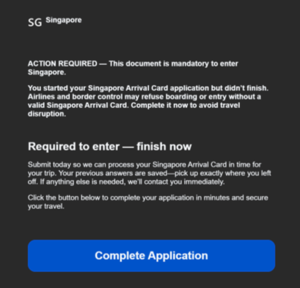
In an example shared by ScamWatch, fraudsters claiming to process visas for Singapore ask travellers to provide personal information, or risk travel disruption.
How to avoid fake visa websites
1. Check Australian government advice: Smartraveller lists visa and entry requirements for Australian passport holders for more than 175 destinations. It also provides links to the legitimate visa authority you should lodge your application with.
2. Confirm with a local embassy or consulate: If you've received visa advice you're unsure about, consult Smartraveller or contact the Australian embassy or consulate of the country you're visiting to confirm what you're being told.
Get stories like this in our newsletters.