Gold health insurance premiums set to jump up to 25%




'Gold' health cover premiums surge up to 25%, Qantas boots Jetstar passengers from lounges, and new rules to combat property underquoting. Here are five things you may have missed this week.
'Gold' health cover premiums to soar by up to 25%
The cost of private health cover has reached an all-time high.
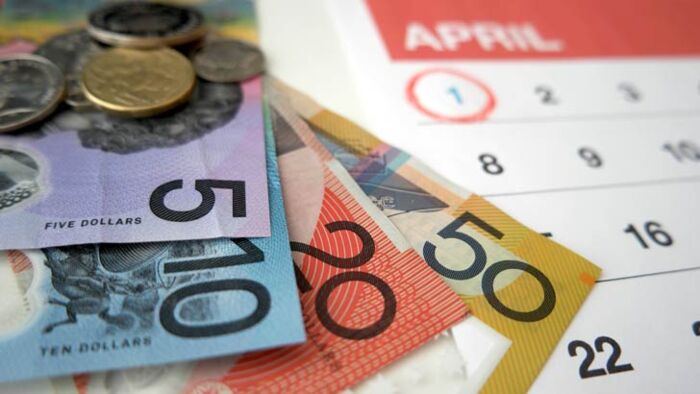
That's according to consumer group CHOICE, which says Australians with 'gold level' health insurance could face premium hikes of up to 25%, far above the government-approved average rise of 4.41%.
CHOICE analysis shows that gold policies across the largest funds will increase by an average of 13.3%.
However, CHOICE health insurance expert, Mark Blades, says, "Of the five largest health funds, HCF has the biggest increase of 25% for its 'Hospital Optimal Gold' cover across all states and territories."
As top-level cover becomes increasingly unaffordable, the proportion of Australians holding comprehensive cover has plunged from 39% in 2020 to 28% at the end of 2025 - "largely due to price hikes", says Blades.
He adds, "We highly recommend consumers prepay their policy for 12 months before their fund increases the price (from 1 April), if they're able to. By doing this, you can secure some savings and delay the 2026 price increase."
Jetstar flyers banned from Qantas lounges
Jetstar just became even more budget. But not in a good way.
From July 1, Qantas lounge access will no longer be available to Platinum and Gold Frequent Flyers as well as Qantas Club members, who are traveling on international Jetstar (JQ) flights.
The only exception is Platinum One Frequent Flyers, who qualify for the top-tier, invitation-only level of the Qantas Frequent Flyer program.
It means that if you're flying with Jetstar, the Qantas lounge will only be available if you're prepared to pay more by booking a Qantas codeshare flight, or fork out for a Jetstar Business Max ticket - the highest fare category.
Aussies travellers aren't happy.
As Reddit user RYLO93 noted, "This sucks for when Jetstar is the only option flying internationally".
NSW and Victoria crack down on property underquoting
NSW and Victoria are clamping down on dodgy real estate practices - just in time for rising interest rates.
Proposed new laws in NSW will hike penalties for underquoting from $22,000 to $110,000, or three times the agent's commission, whichever is greater.
Penalties for dummy bidding at auctions will jump from $55,000 to $110,000.
In addition, a price or price guide will need to appear on advertising, so prospective buyers don't waste time on properties outside their budget.
Agents will also be required to publish a Statement of Information showing how a property's selling price is calculated, including comparable sales and the suburb's median sale price.
NSW Fair Trading Minister Anoulack Chanthivong says, "These reforms are a significant step forward in protecting home buyers from unscrupulous real estate agents taking advantage of a tight housing market."
In Victoria, the Allan Government is already moving to end underquoting by requiring reserve prices to be published ahead of auction.
Now, Victoria is introducing new laws that strip away secrecy around a home's sale price.
There is currently no requirement in Victoria for final sale prices to be made public.
This not only makes it hard for buyers to gauge local prices, it can also fuel underquoting.
The proposed reforms follow the recent announcement that in Victoria, property sellers - not buyers - will be required to supply building and pest inspection reports.
This all comes against the backdrop of home sellers achieving record profits on sale - a median profit of $440,000 nationally according to Domain.
Early bird investors ahead by over $200,000
Yes, we live in uncertain times, and yes, anyone who drives regularly is feeling the pinch of higher pump prices.
But it's still important to invest.
Finder's 2026 Wealth Building report shows one in three Australians regret not investing from an earlier age.
There are good reasons for this.
Investors aged 40-plus, who began their investment journey in their 20s, now have average net wealth of $1.74 million.
That's around $220,000 more than those who got started in their 30s (average wealth of $1.52 million).
Those who held off investing until their 40s have even less net wealth - averaging $1 million.
It goes to prove that 'time in the market' really is more important than market timing.
Three in four actively managed funds fail to match the market
Of the 400-plus exchange traded funds (ETFs) listed on the Aussie sharemarket, many (though not all) are passively managed funds that aim to match rather than beat market returns.
This is a key factor that keeps ETF fees lows.
Even so, some investors pin their hopes on beating market returns by investing in actively managed funds, even though they may charge higher fees.
However, the latest SPIVA Australia Scorecard shows how hard it is to consistently deliver above-market returns.
The Scorecard measures the performance of actively managed funds relative to their benchmarks.
The latest Scorecard shows that in 2025, when Australian shares notched up gains of 10.3%, three in four (74%) actively managed Aussie share funds failed to match market returns.
The likelihood of active management outperforming the market narrows over time.
Over the last 10 years, nine out of 10 (88%) actively managed Australian share funds failed to achieve market returns.
When it comes to international share funds, the results are no better.
Over the past 10 years, a thumping 95% of actively managed global share funds couldn't match market returns.
It's a convincing argument for investors to stick with low cost index funds even during times like the present when sharemarkets are taking a bath in the red.
Get stories like this in our newsletters.