How to join the Qantas data breach class action




A class action launches for 6 million Qantas customers, why multi-tasking on a Tuesday could cost you, and the popular pup that could cost you $3000 annually. Here are five things you may have missed this week.
Compensation sought for nearly 6 million Aussies caught up in Qantas data breach
Legal firm Maurice Blackburn has lodged a complaint with the Office of the Australian Information Commissioner (OAIC) on behalf of almost 6 million Qantas customers impacted by the June 30 data breach, and is seeking compensation for them.
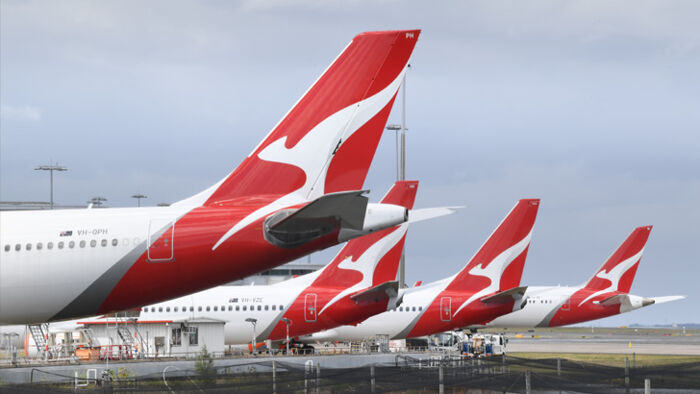
It may be early days but if you had your personal information compromised by the Qantas hack, you're eligible to register with Maurice Blackburn.
Maurice Blackburn Principal lawyer Elizabeth O'Shea is encouraging Qantas customers who were impacted by the breach to "register with us to receive updates about the representative complaint and compensation which may be sought on your behalf."
Registration is free and can be done online at the Maurice Blackburn website.
The day you're most likely to be scammed
Wednesday may be 'hump day', and Friday is just one sleep away from the weekend.
But Tuesday is the day we're most likely to fall for a scam.
That's according to Westpac data that shows Tuesday afternoon (around 4pm) is when we are most vulnerable to scams.
Westpac head of fraud prevention, Ben Young, says, "We're seeing a clear pattern where scammers are striking later in the day, most commonly on Tuesday afternoons, when people are multitasking and not paying close attention to the signs that something could be a scam.
"This is why it's so important for people to stay alert and take a moment to think before clicking links, sharing information or sending money," says Young.
To help out-smart scammers, Westpac has introduced a new artificial intelligence tool to help detect scams in real-time during customers calls.
"I would encourage everyone to keep your eyes peeled for scam activity and if you suspect you've been impacted, tell the bank immediately. The earlier we're notified the sooner we're able to try and help," adds Young.
This popular pooch could cost you close to $3000 annually
If you're planning to buy a pet, it can pay to choose the breed with care.
The latest ABS inflation numbers show veterinary costs for pets increased 5.8% in the past year.
While pet insurance can help with the cost of vet bills, Canstar says premiums have jumped by up to 9.9% for dogs and 8.7% for cats over the last 12 months.
The average-priced policy for a dog can set you back about $1359 annually.
The cost can be far higher for certain breeds, with French Bulldogs being the most expensive to insure.
The average annual premium for accident and illness cover for a Frenchie is around $2948 annually - more than double the $1456 to insure a Golden Retriever.
It could just be cheaper to buy a cat.
Premiums on cat cover average around $800 annually.
The big mistake that can cost retirees $18,000
Research from Aware Super has confirmed that a complex Age Pension system could be costing the nation's seniors dearly.
According to the study, around one in three (31%) people who apply for the Age Pension wait for 12 months or more after turning 67 (Pension eligibility age) to submit their application.
Aware says this can mean missing an average of $18,000 in Age Pension benefits - at a time when every dollar counts.
Aware Super's group executive of member growth, Steven Travis, says many Australians don't realise they can apply for the pension 13 weeks before they turn 67.
This way your pension can be ready to go when you hit age 67, letting you receive every dollar you're entitled to.
To help fund members navigate the transition to retirement, Aware has created an Age Pension Application 'how to' video series, guide and checklists, making it easier to complete the Centrelink Age Pension paperwork.
Australian cities rate poorly for EV charging
Electric vehicles (EVs) can deliver a motza in fuel savings - as much as $12,200 over five years for a motorist who clocks up 25,000 kilometres annually.
Even so, Aussies still aren't racing out to buy EVs.
Figures from the Federal Chamber of Automotive Industries show EVs accounted for just 7.7% of new cars sold so far in 2025, down from 8.0% in 2024.
This is despite there being more than 100 EV models on the market.
Part of the problem is that Australian cities are far from EV friendly.
Compare the Market has analysed over 100 cities globally, ranking their EV-friendliness based on incentives, charging stations per capita and EV fleet size.
Aussie cities did not perform well.
Canberra, the highest ranking Australian city, took out the 33rd spot.
That was followed by Adelaide (60th), Melbourne (73rd), and Sydney (74th).
Brisbane (85th), Perth (86th) and Hobart (89th) narrowly avoided the bottom of the index.
For context, The Hague (Netherlands), which took out the top spot for EV-friendliness, has a whopping 745 EV chargers per capita.
By contrast, Perth and Hobart have nine chargers per capita. Sydney has just six per capita.
Get stories like this in our newsletters.


 Reply
Reply